
2026-08-26
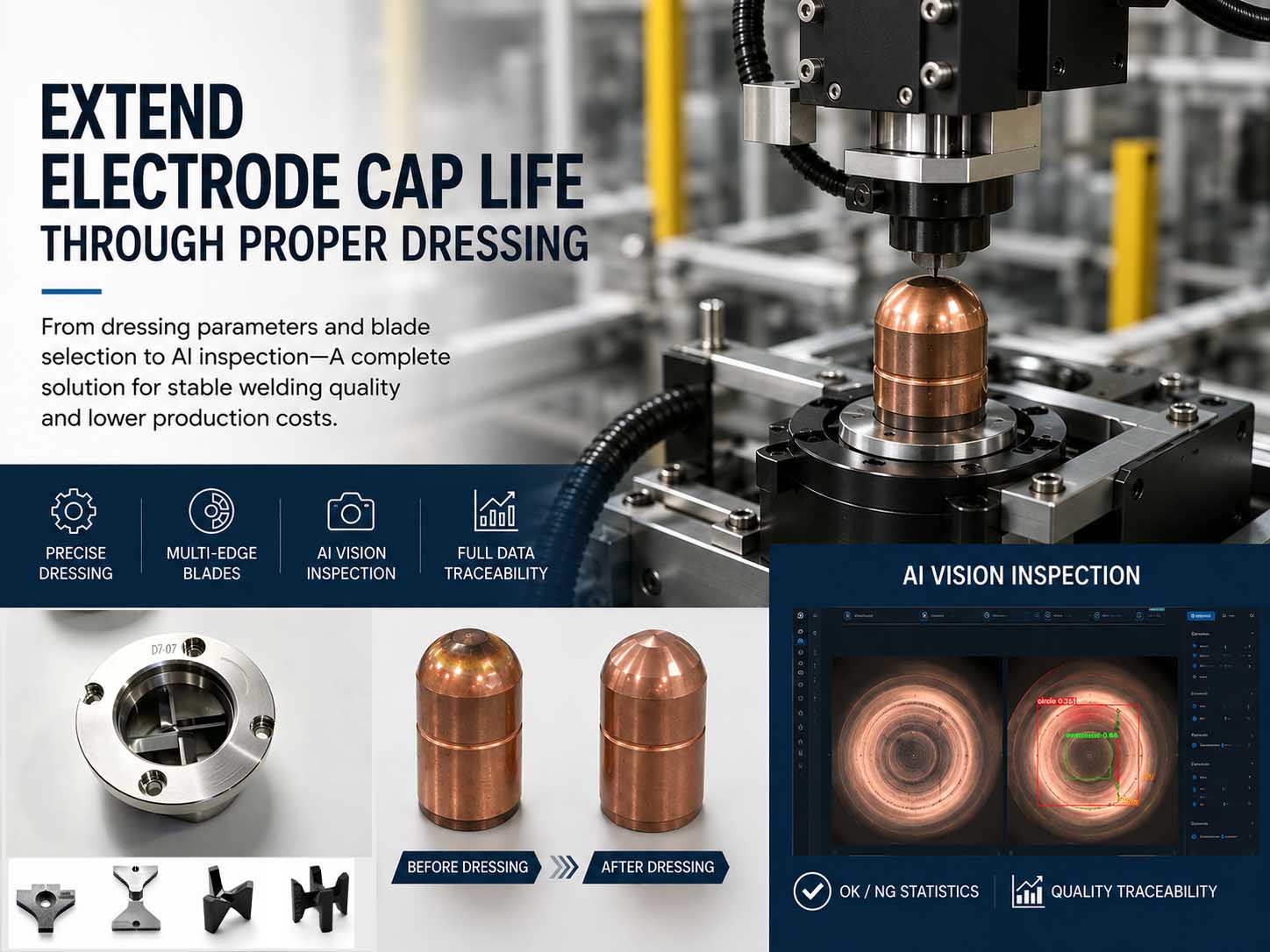
An electrode cap is a critical consumable component in resistance spot welding. It directly participates in the welding process and plays an important role in maintaining stable electrical and mechanical conditions at the weld interface. In automotive manufacturing, Body-in-White (BIW) production and other high-volume automated spot welding applications, the condition of the electrode cap can directly affect weld quality, process stability and production efficiency. As the number of welds increases, the working face of the electrode cap gradually becomes worn, deformed or contaminated. Copper pickup, surface marks and other irregularities may also develop during continuous welding. Electrode cap dressing is therefore used to remove the damaged surface layer and restore the required geometry and working condition of the electrode cap. However, electrode cap dressing is not simply a matter of removing as much material as possible.Insufficient dressing may leave damaged areas on the working face, while excessive dressing unnecessarily removes electrode material and reduces the number of effective dressing cycles available from a single electrode cap. Therefore, controlling the dressing amount, selecting the right dressing cutter, performing routine maintenance and using intelligent inspection to identify abnormalities are all important for extending electrode cap life. In practical production applications, electrode cap dressing performance can be systematically improved through four key areas. 1. Control the Dressing Amount to Avoid Excessive Material Removal The primary objective of electrode cap dressing is to remove damaged material and restore the required working face—not to remove more material than necessary. If the dressing amount is insufficient, defects generated during welding may remain on the electrode face, including black marks, raised areas, localized wear and uneven surfaces. These conditions can alter current density and electrode force distribution, potentially affecting weld consistency. On the other hand, excessive dressing removes a larger amount of otherwise usable electrode material. This…
2026-08-11
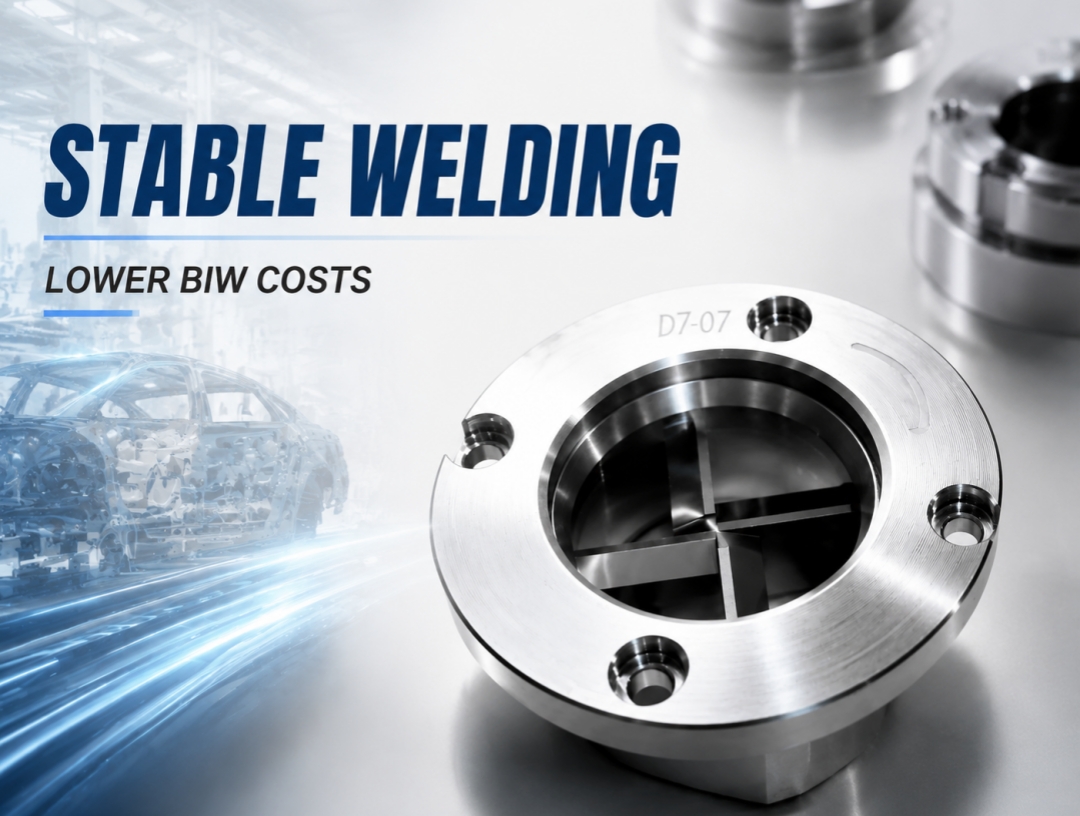
In the demanding environment of automotive Body-in-White (BIW) welding, electrode cap dressing blades may appear small, but they play a critical role in determining weld spot quality, electrode cap service life, and overall production cost. Behind a seemingly simple blade lies a complete chain of engineering expertise, including material science, precision manufacturing, and strict quality management. With decades of experience in welding equipment development, Shenzhen Hongbai Technology Co., Ltd. has successfully transformed its independently developed electrode cap dressing blades from ordinary consumable components into precision-engineered products integrating advanced structural design, high-accuracy manufacturing processes, and international certification standards. 1. Design Philosophy: A Fundamental Shift from “Cutting” to “Dressing” Traditional electrode cap dressing is essentially a cutting process, where sharp cutting edges forcibly remove the copper-aluminum alloy layer accumulated on the electrode cap surface. Although this method is straightforward, it has two major limitations: High material removal rate (approximately 0.08 mm per dressing cycle) Short blade service life (only around 8,000–12,000 dressing cycles for single-edge blades) Hongbai’s dressing blade design achieves a breakthrough by redefining the fundamental dressing principle. 1.1 Multi-Edge Structure: From Single Cutting to Multi-Stage Dressing The core innovation of Hongbai dressing blades lies in the multi-edge structure. Currently, Hongbai provides four blade configurations. Taking the four-edge blade as an example, its four cutting edges are arranged at 90-degree intervals. During the dressing process, multiple edges work simultaneously, distributing cutting forces across several contact points. This reduces the material removal amount per dressing cycle to only 0.01–0.035 mm, bringing the process closer to precision dressing rather than conventional cutting. The direct benefits include: Reduced electrode cap material consumption Extended electrode cap service life Increased welding capacity from approximately 3,000 weld spots to 6,000 weld spots per pair of electrode caps 1.2 Four-Edge Right-Angle Design: 90° Geometry and 0.01 mm Dressing…
2025-12-11
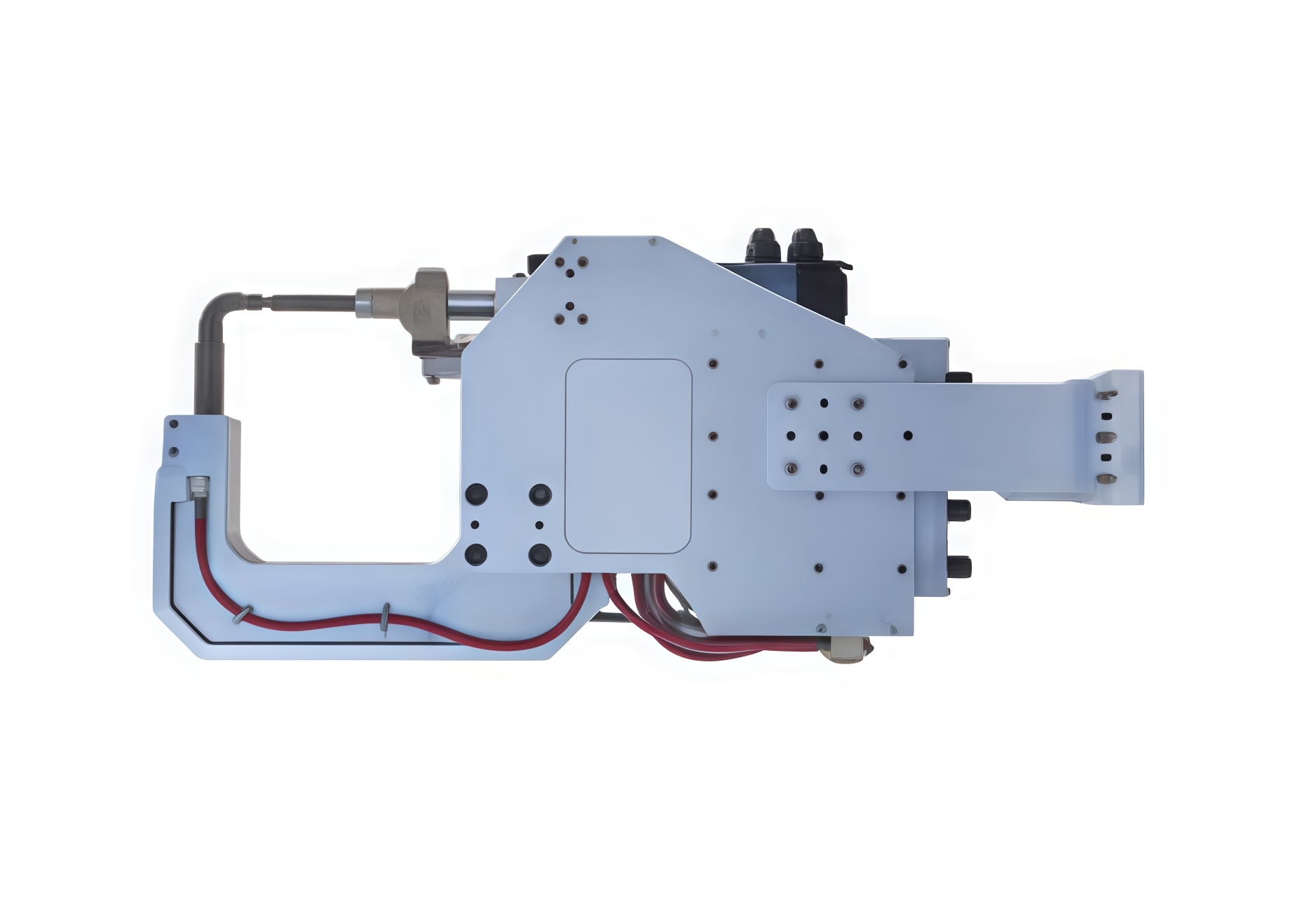
Product Introduction The spot welding machine is a brand-new type of resistance welding machine developed and manufactured by our company.It adopts the world’s most advanced 10kHz high-frequency inverter technology, full-bridge soft-switching technology, and DSP digital control technology. The welding gun uses an electric servo mechanism, enabling real-time adaptive control of welding pressure and welding current. The welding transformer is small in size and lightweight, making it easy to integrate with the welding gun. Product Features Superior Welding Quality: Excellent weld formation with minimal spatter. Especially when welding multi-layer zinc-coated steel sheets and high-strength steel sheets, spatter is virtually eliminated. Superior Performance: Features a compact transformer size, high output power, and high control precision. Adaptive Control: Achieves adaptive control of welding pressure and welding current, allowing a single welding clamp to perform multiple welding operations with different processes at the same workstation. Reliable Structure: The hanging structure is made of high-quality aerospace-grade aluminum with precision machining. The three-dimensional rotating structure optimizes the flexibility and reliability of welding operations. When equipped with extra-large welding clamps, the main structure uses aerospace-grade aluminum and high-quality copper to ensure rigidity and strength. Strong Compatibility: Compatible with both C-type and X-type welding clamps. Different structural designs of the welding arms can meet the operational needs of various complex workstations. Strong Power Grid Adaptability: The welding controller adopts a wide voltage range design, offering good power grid adaptability and strong anti-interference capabilities.