Since the company's establishment
Company staff
Enterprise land area
Serving customers
NEW GENERATION•NEW TECHNOLOGIES•NEW PROCESSES
New technological advantages:
100KHz synchronous pure digital hardware current loop technology;
Synchronous drive and control integrated linear motor control technology;
AC/DC welding technology;
Based on 4G/5G Internet of Things technology;
Group control system, TB-level data recorder;
QC quality analysis system based on statistical data;
QC quality analysis system based on AI artificial intelligence;

Company size introduction
The company regards innovation as the foundation, and continuously invests heavily in the developing and strengthening its R&D team, and is committed to building an industry-leading R&D center. The company now has nearly 500 employees, of which 30% are R&D personnel, and the average annual R&D expenses account for more than 15% of sales revenue. The company has not only completed the national key science and technology research projects and the National Torch Plan projects, but also successfully developed a number of innovative products, and has won more than 100 international and domestic patents and software copyrights.
Our product
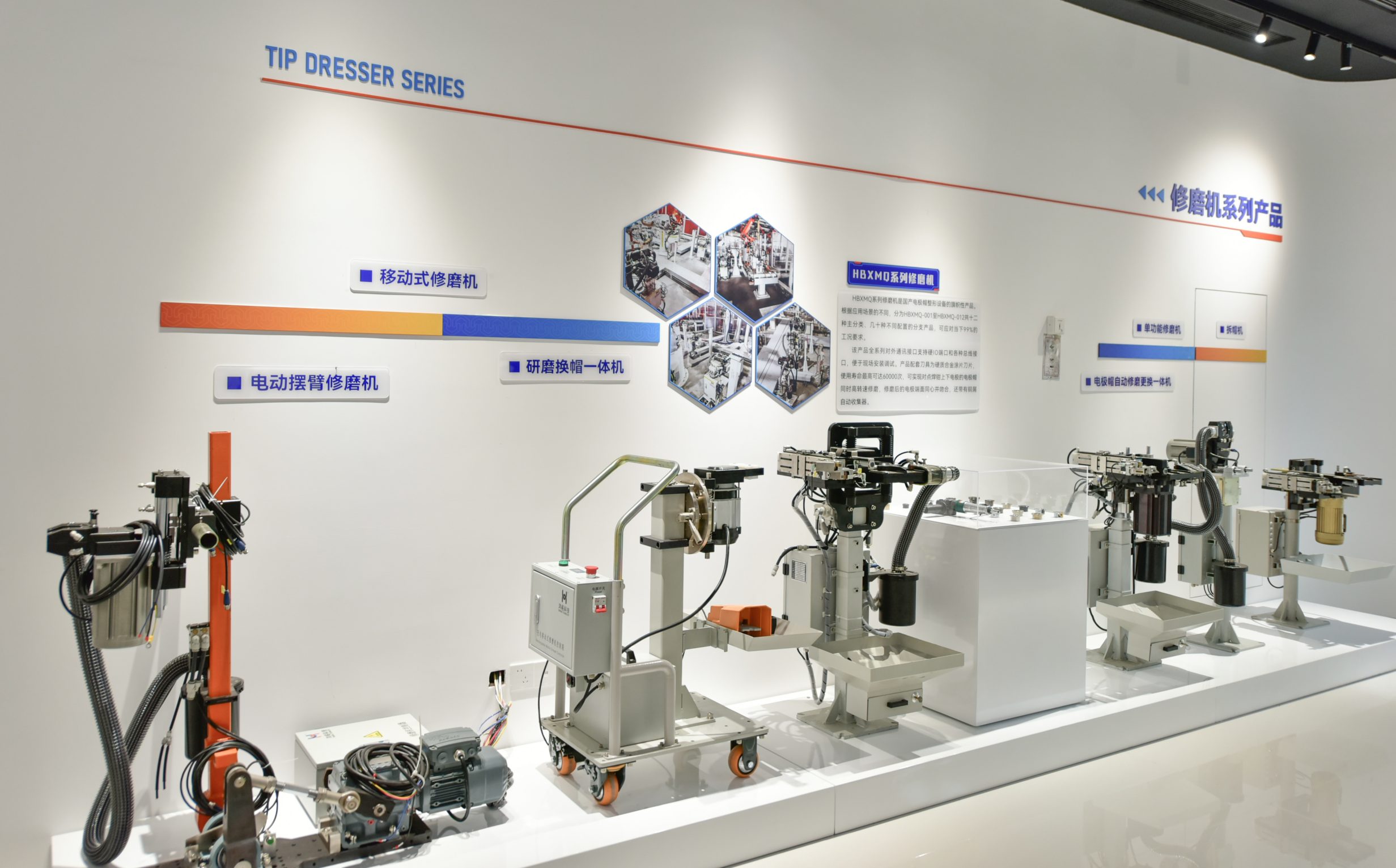
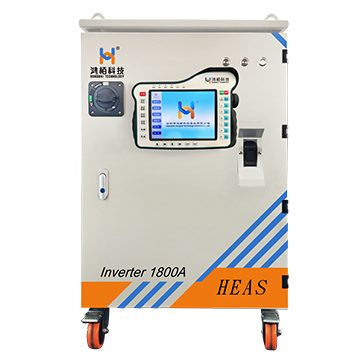
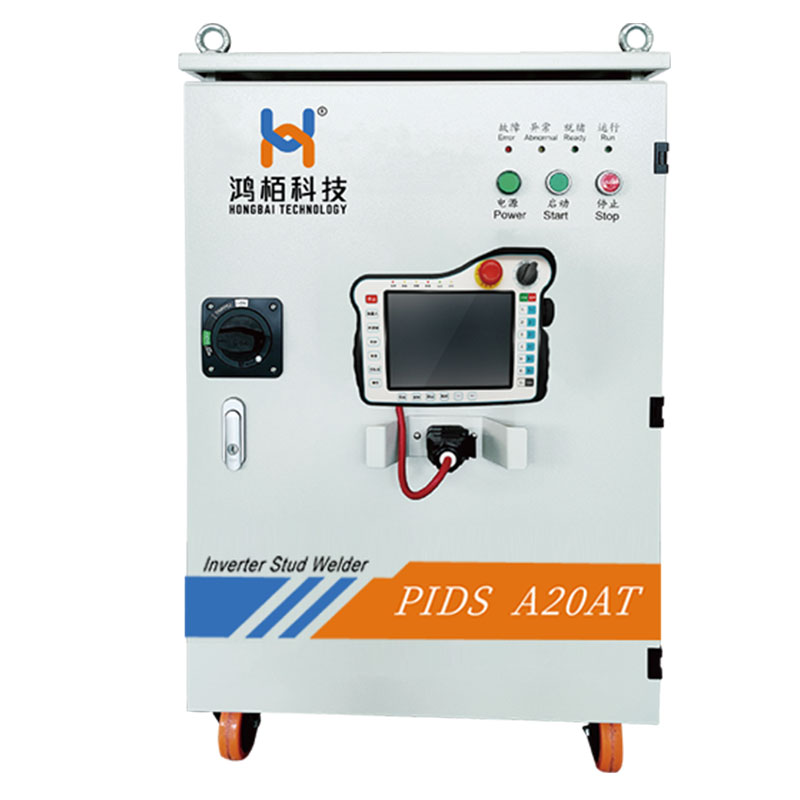
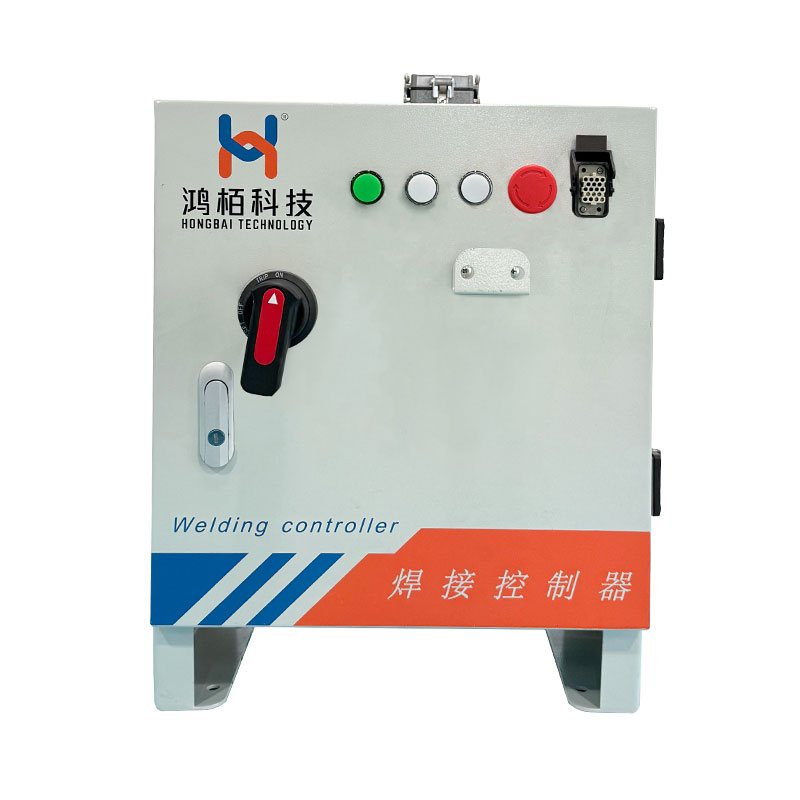
Since entering the automotive intelligent welding equipment field in 2003, the company has expanded its business scope to include body stud welding equipment and workstations, spot welding equipment and workstations, and a series of grinders.
It is a national high-tech enterprise in China and a "little giant" enterprise specializing in niche markets with cutting-edge technologies. It undertakes national key scientific and technological research projects and owns a provincial engineering technology research center.
It has broken the international monopoly. Its stud welding machine has the highest market share in China. It serves more than 30 mainstream automobile manufacturers and parts suppliers such as Tesla and BYD.
R & D personnel account for 30%. The average annual R & D expenditure exceeds 15% of the revenue. It has accumulated over 100 international/domestic patents and software copyrights, achieving independent control of core technologies.
It has a 45,000-square-meter modern production base (in Guangdong and Anhui), with large-scale intelligent manufacturing and flexible production capabilities.
It forms a closed-loop from R & D and design, production and manufacturing to sales and service, ensuring the safety and response efficiency of the supply chain.
It covers three high-growth fields: intelligent automotive welding equipment, industrial automation, and smart home, creating industrial synergy effects.
24
2026 - 10
With a Focus on Hongbai Technology’s Servo Welding Gun Technology Based on Hollow Electric Cylinders Abstract Resistance spot welding is a core process in automotive body-in-white (BIW) manufacturing. The welding gun connects mechanical motion with the welding process, making force consistency and electrode movement critical to weld quality and production stability. Two common actuation approaches are pneumatic and electric servo. Pneumatic guns use compressed air to drive a cylinder and are well established, often with a lower initial investment. Servo-driven guns use a servo motor and electric cylinder to program electrode position, movement speed, and the force application sequence. The right choice depends on the material, process requirements, level of control, and integration with the wider production system. This article compares both technologies in terms of force control, process adaptability, and robot integration, with a focus on Hongbai Technology’s hollow electric cylinders for robotic spot welding in electric vehicle manufacturing. Applications include aluminum alloy, high-strength steel, and multi-sheet welding. 1. Force Consistency: The Numbers Behind the Process Force consistency is best evaluated against actual welding parameters. Hongbai’s SHF inverter DC spot welding system lists representative process parameters for steel applications, including: Electrode force: 80–150 kgf Welding current: 2.1–2.8 kA Weld time: 5–8 cycles Aluminum welding can require a substantially different process window. One published application uses the following parameters: Parameter Aluminum welding case Sheet stack 2+2 mm Electrode force 6,000 N Welding current 37,000 A Weld time 180 ms These figures describe a specific application, not universal settings for every material or joint. The practical question is whether the gun can maintain the required process conditions from the first weld to the four-thousandth weld of a production shift. Repeatability over time matters just as much as achieving a target value during initial setup. 2. Pneumatic Spot Welding Guns: A Proven…
20
2026 - 10
How position, velocity, and current control work together to achieve precise, repeatable gun motion. In automated stud welding, the welding gun must reach programmed positions, follow a defined motion profile, and respond quickly to changes in mechanical load. These requirements are managed by a cascaded three-loop servo control architecture: the position loop, velocity loop, and current loop. Hongbai’s servo control architecture combines MCU and FPGA processing to coordinate motion commands, feedback regulation, and gun movement throughout the welding cycle. 1. The Three Loops of Servo Control Position Loop: Accurate Positioning The outermost loop controls the position of the gun’s lifting mechanism using feedback from a high-resolution optical linear encoder. Its main functions are to track commanded positions, reduce positioning errors, and maintain the required position during designated stages of the welding cycle. Accurate positioning helps ensure that the gun follows the programmed movement sequence and establishes the intended lift conditions for the welding process. Velocity Loop: Motion Profile Tracking The velocity loop regulates motor speed according to the trajectory generated by the motion planner. Velocity feedback, derived from position measurements or dedicated estimation, enables the controller to correct tracking errors. The specified motion configuration includes: Maximum velocity: adjustable range of approximately 50–800 mm/s (recommended 400 mm/s) Acceleration: adjustable range of approximately 20–80 m/s² (recommended 50 m/s²) These are application-specific settings. Actual motion performance depends on the gun mechanism, moving mass, stroke, and load conditions. Current Loop: Fast Torque Response The innermost loop regulates servo motor phase current, which is closely related to motor torque. It enables the drive to respond to acceleration commands and changes in mechanical load. The specified servo-drive parameters are: Parameter Value Current-loop control period 20 μs Switching frequency 50 kHz Maximum current command/output ±20 A Specified current response 10 A within 40 μs These figures apply to the…
16
2026 - 10
Hongbai Technology Technical Column | Professional Series Introduction In stud welding, a small change in current or welding time can make a noticeable difference to the final weld. Too little energy may result in incomplete fusion, while excessive heat can cause spatter, an irregular weld collar, or burn-through on thin sheet metal. On Hongbai Technology’s SAW-3600 series stud welding system, parameters such as pilot current, welding current, and upset time are used to configure the welding cycle. Getting the best result is not simply a matter of increasing the current. The stud, base material, surface condition, lift height, and welding gun movement all need to be considered together. This article looks at how these parameters work, the reference settings available on the equipment, and what to consider when adjusting them for different applications. 1. How the Stud Welding Cycle Works In the servo-controlled welding process described here, the electrical output and the mechanical movement of the stud work together through four stages. Stage 1: Initial contact The stud is positioned against the workpiece, creating the electrical contact required to initiate the welding sequence. Consistent positioning and stable contact help establish repeatable starting conditions. Stage 2: Pilot arc The power source applies the pilot current while the servo welding gun lifts the stud away from the workpiece. This establishes the pilot arc before the main welding stage begins. The pilot stage helps initiate the arc and prepare for the main welding cycle. On coated or contaminated surfaces, the results also depend on the coating, surface cleanliness, and the selected current and time. Stage 3: Main welding arc When the stud reaches the preset lift height, the power source delivers the main welding current for the programmed duration. The arc melts the end of the stud and the corresponding area of the…
13
2026 - 10
Aluminum welding is not just about increasing current With the rapid development of electric vehicles (EVs) and lightweight automotive structures, aluminum has become increasingly important in Body-in-White (BIW) manufacturing. However, welding aluminum is fundamentally different from welding steel. Many manufacturers find that a conventional DC stud welding system can achieve stable results on steel studs but struggles when applied to aluminum components. Problems such as unstable arc behavior, porosity, insufficient fusion, and low pull strength often occur. The reason is not simply insufficient welding current. The real challenge comes from the unique physical properties of aluminum: High thermal conductivity Low melting temperature High melting point oxide layer Rapid heat dissipation These characteristics determine that aluminum stud welding requires more precise control of heat input and current direction. This is why advanced AC/DC stud welding technology has become an important solution for aluminum automotive applications. Aluminum vs Steel: Why the Welding Process Is Completely Different Although aluminum and steel can both be joined through arc welding, their melting behavior is very different. Property Steel Aluminum Impact on Welding Melting point Approx. 1500℃ Approx. 660℃ Aluminum melts much earlier Oxide layer Thin oxide film Al₂O₃ oxide layer, melting point approx. 2050℃ Oxide layer is difficult to break Thermal conductivity Approx. 50 W/(m·K) Approx. 237 W/(m·K) Heat dissipates much faster Density 7.8 g/cm³ 2.7 g/cm³ Lightweight structure advantage Molten pool stability Relatively stable Difficult to maintain Requires precise heat control The biggest challenge is the aluminum oxide layer. Although aluminum itself melts at around 660℃, the aluminum oxide layer on the surface requires temperatures above 2000℃ to break down. This means: Before the aluminum base material can melt properly, the oxide layer must first be effectively removed. Without breaking this barrier, the stud and base material cannot form a strong metallurgical bond. Why…
09
2026 - 10
In resistance spot welding, a stable weld is not simply a matter of setting the correct current. The result depends on how welding current, electrode force, and weld time interact throughout the welding cycle. This becomes particularly important in automotive manufacturing, where a single production line may handle different sheet thicknesses, galvanized steels, and high-strength materials. A welding schedule that performs well on one material combination may produce excessive spatter or insufficient weld nugget formation on another. Increasing the current is not always the answer. Nor does applying more electrode force necessarily improve the weld. What matters is maintaining the right relationship between electrical heat generation and the mechanical conditions at the joint. This is the principle behind dual-loop control in resistance spot welding. By regulating welding current and electrode force through coordinated feedback control, the system can respond more effectively to process variations and help maintain consistent welding performance. How Dual-Loop Control Works Dual-loop control refers to two feedback control functions operating within the welding system: closed-loop welding current control and weld force control. Although they serve different purposes, both influence the conditions under which the weld nugget forms. Control function Feedback or monitoring variable Control mechanism Primary objective Welding current control Actual welding current Inverter output regulation Maintain the commanded current despite electrical load variations Weld force control Electrode force, where sensor feedback is available Pneumatic proportional valve or electric servo actuator Regulate electrode force and monitor force-related process conditions Adaptive coordination Application-specific process feedback and programmed welding schedules Control logic and parameter adjustment Match welding conditions to qualified material and joint requirements The current control loop monitors the actual welding current and compares it with the programmed target. The controller adjusts the inverter output to reduce deviations, helping maintain the required current as electrical conditions change. The…
30
2026 - 09
The weld cycle is complete. The stud looks properly welded, and the welding system shows no obvious alarm. Then, during assembly or a pull test, the weld stud breaks away from the workpiece. For engineers responsible for welding quality, this is a familiar but frustrating situation. The first reaction is often to increase the welding current or extend the weld time. Sometimes that changes the result. But if the actual cause lies in stud positioning, grounding, surface condition, feeding stability, or process repeatability, changing the welding parameters alone may only move the problem from one place to another. A more reliable approach is to look at the complete welding process and determine where the weld started to lose stability. 02|Start With the Failed Weld Before changing any welding parameters, start with the failed weld itself. The fracture surface can provide useful evidence about how the weld was formed. Little visible fusion may point toward insufficient heat input or unstable arc conditions. Uneven fusion around the stud may indicate problems with gun alignment, stud positioning, grounding, or surface condition. It is also important to distinguish between a stud that never achieved sufficient fusion and one that formed a weld but later failed under mechanical loading. These two situations may look similar from the outside, but they require different troubleshooting approaches. Cross-section analysis can reveal the difference between proper fusion, partial fusion, and lack of fusion in stud welding. The first question should therefore be: What does the failed weld tell us about how the weld was formed? Observed Condition Possible Direction of Investigation Little or no visible fusion Welding current, weld time, lift height, arc stability Uneven fusion around the stud Gun alignment, stud positioning, grounding Excessive spatter Heat input, arc conditions, parameter combination Weld looks acceptable but stud pulls off…