
With a Focus on Hongbai Technology’s Servo Welding Gun Technology Based on Hollow Electric Cylinders
Abstract
Resistance spot welding is a core process in automotive body-in-white (BIW) manufacturing. The welding gun connects mechanical motion with the welding process, making force consistency and electrode movement critical to weld quality and production stability.
Two common actuation approaches are pneumatic and electric servo. Pneumatic guns use compressed air to drive a cylinder and are well established, often with a lower initial investment. Servo-driven guns use a servo motor and electric cylinder to program electrode position, movement speed, and the force application sequence.
The right choice depends on the material, process requirements, level of control, and integration with the wider production system. This article compares both technologies in terms of force control, process adaptability, and robot integration, with a focus on Hongbai Technology’s hollow electric cylinders for robotic spot welding in electric vehicle manufacturing.
Applications include aluminum alloy, high-strength steel, and multi-sheet welding.
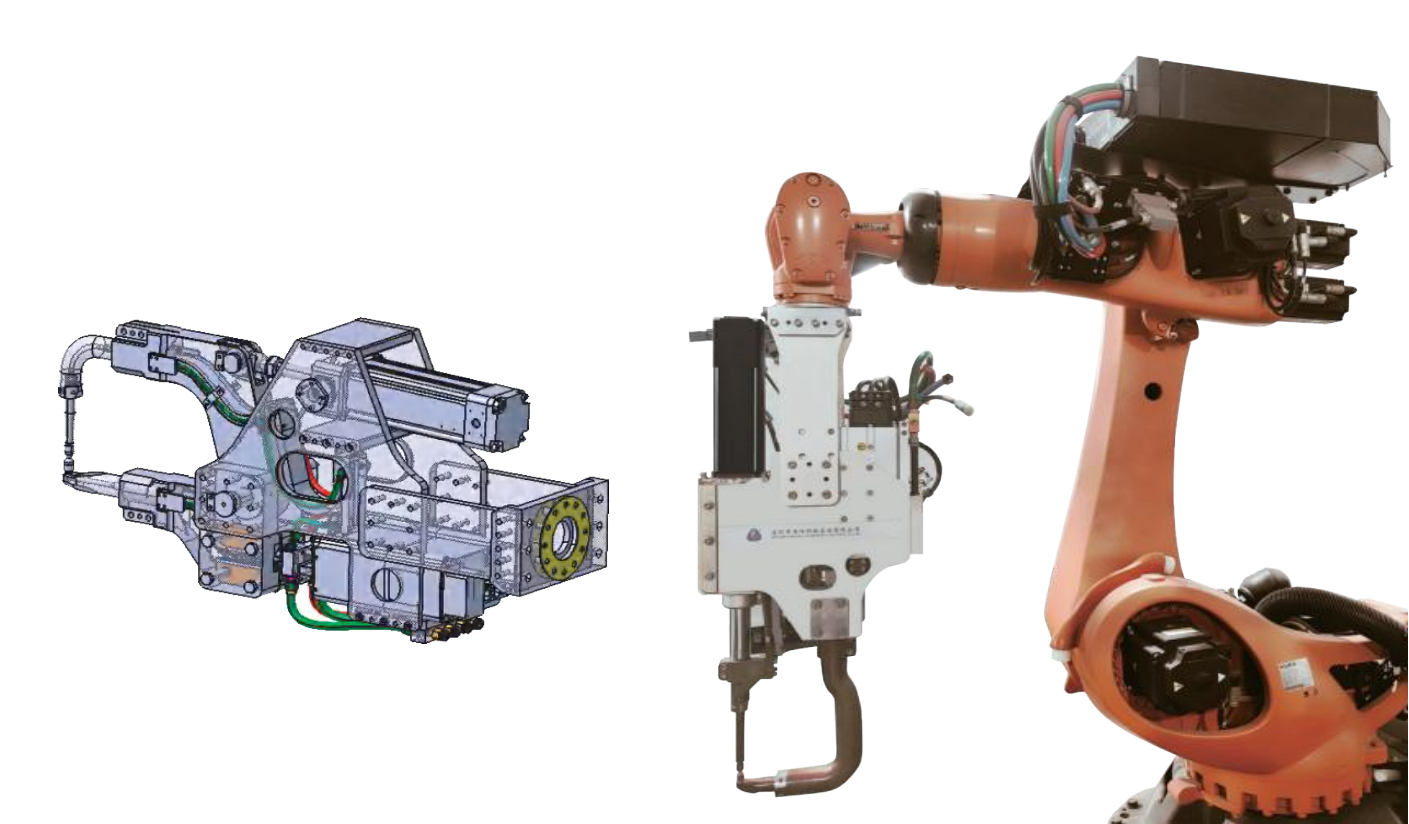
Pneumatic and servo-driven spot welding guns for automated automotive body assembly.
1. Force Consistency: The Numbers Behind the Process
Force consistency is best evaluated against actual welding parameters.
Hongbai’s SHF inverter DC spot welding system lists representative process parameters for steel applications, including:
- Electrode force: 80–150 kgf
- Welding current: 2.1–2.8 kA
- Weld time: 5–8 cycles
Aluminum welding can require a substantially different process window. One published application uses the following parameters:
| Parameter | Aluminum welding case |
|---|---|
| Sheet stack | 2+2 mm |
| Electrode force | 6,000 N |
| Welding current | 37,000 A |
| Weld time | 180 ms |
These figures describe a specific application, not universal settings for every material or joint.
The practical question is whether the gun can maintain the required process conditions from the first weld to the four-thousandth weld of a production shift. Repeatability over time matters just as much as achieving a target value during initial setup.
2. Pneumatic Spot Welding Guns: A Proven Solution
Pneumatic guns generate electrode force through a pressure balance. Compressed air drives the cylinder, and the resulting force acts against the resistance of the workpiece and the mechanical system.
How the system works
A pneumatic gun can be a practical choice when the material, sheet thickness, and process window are relatively stable. Its established design and generally lower initial investment make it attractive for conventional steel applications.
Hongbai Technology’s SHF inverter DC spot welding system uses a proportional-valve-controlled pneumatic servo mechanism. It supports adaptive control of welding force and welding current, allowing one gun to accommodate two or more different processes at a single station.
For larger gun configurations, the gun body is machined from high-grade aviation aluminum to reduce weight while maintaining rigidity and strength.
What affects force consistency?
Pneumatic force is influenced by more than the programmed welding recipe. Relevant factors include:
- Source pressure and fluctuations in the plant air supply
- Pressure drop across long or shared air lines
- Seal friction and cylinder condition
- Ambient temperature and maintenance status
The cylinder’s stroke end is generally determined by a mechanical limit or the system’s pressure balance. Unlike a servo system, a conventional pneumatic arrangement does not inherently provide freely programmable electrode positioning or continuous position feedback.
Proportional valves and additional sensors can improve pneumatic control. The actual capability therefore depends on the specific gun and control configuration, rather than on the pneumatic principle alone.
3. Servo Spot Welding Guns: Programmable Motion and Force Control
Servo-driven guns use a servo motor and electric cylinder to control electrode movement.
For more details, see our hollow servo electric cylinder for spot welding. Depending on the system configuration, electrode position and motion can be programmed, while force can be monitored or controlled through an appropriate feedback arrangement.
The practical advantage is the ability to coordinate gun movement with the requirements of different materials, sheet stacks, and production recipes.
Hongbai’s robot SHF spot welding system
Hongbai Technology’s robot SHF inverter DC spot welding system uses an electric servo gun with real-time adaptive control of welding force and current.
Note on product designations: Hongbai’s SHF inverter DC spot welding systems are offered in both a non-robot configuration, using a proportional-valve-controlled pneumatic servo gun, and a robot configuration, using an electric servo gun. The pneumatic mechanism described in Section 2 applies to the non-robot configuration; the electric servo gun described here applies to the robot system.
The system is designed for applications involving:
- Plain steel
- Zinc-coated steel
- Hot-formed steel
- High-strength steel
- Aluminum alloy
Hongbai specifies low-spatter performance, including essentially spatter-free results under designated conditions for multi-layer zinc-coated steel and high-strength steel. Actual results depend on the material combination, electrode condition, welding parameters, and validated process window.
Digital control with the robot MF system
The robot MF inverter DC spot welding system uses a fully digital power supply with a high-speed DSP. Its control system incorporates adaptive functions designed to accommodate different sheet thicknesses and welding conditions.
Depending on the configured process, a single gun at one station can handle cold-rolled, galvanized, hot-formed, and high-strength steel.
Servo gun configuration for aluminum
For aluminum welding, the gun features a modular body designed for compatibility with multiple robot brands and quick changeover. The configuration supports single or dual welding transformers.
Key features include:
- Electric servo drive
- Gun-arm force capability specified at 900 kgf and above
- Real-time force monitoring and control
- Programmable weld time and welding current
- Parameter adjustment through a handheld programmer
Precise control of welding current and electrode force helps improve weld strength and consistency. The actual performance must be validated against the specific aluminum alloy, sheet stack, electrode geometry, and welding schedule.
4. Process Adaptability by Material
Different materials place different demands on the welding process. Actuator selection should follow the material and joint requirements, rather than the other way around.
Galvanized and multi-layer zinc-coated steel
Zinc melts and vaporizes during resistance spot welding, affecting contact conditions and potentially contributing to spatter. The electrodes must establish appropriate contact and force before and during current application.
For multi-layer zinc-coated steel, force control and electrode movement can help stabilize the process. Hongbai specifies essentially spatter-free performance for designated applications using its servo gun. Such claims should be evaluated against the actual production conditions and acceptance criteria.
Aluminum alloy
Aluminum places demanding requirements on welding current, electrode force, and process timing. One published application uses:
| Parameter | Value |
|---|---|
| Sheet stack | 2+2 mm |
| Electrode force | 6,000 N |
| Welding current | 37,000 A |
| Weld time | 180 ms |
| Gun-arm force capability | 900 kgf and above |
| Maximum controller welding current | Up to 60,000 A |
The controller’s inverter output is specified at 1.8 kA. This value should not be confused with the welding current delivered at the electrodes, which depends on the transformer and system configuration.
For this type of application, maintaining the required force and current throughout the weld cycle is essential. Changes in electrode force cannot always be compensated for simply by adjusting the current recipe.
High-strength and hot-formed steel
High-strength and hot-formed steels can be challenging because of their mechanical properties and the requirements of the joint. A material with a yield strength of 1,560 MPa, for example, can require careful control of electrode contact and force throughout the welding cycle.
Hongbai’s 10 kHz SHF gun is specified for low-spatter welding of high-strength steel under designated conditions.
One published application combines:
- Outer sheet: 2.0 mm, 1,560 MPa hot-formed steel
- Middle sheet: 3.0 mm, 700 MPa steel
- Other sheet: 2.0 mm, 700 MPa steel
This illustrates why material combinations and stack geometry need to be considered when choosing a welding gun. The appropriate force profile and welding schedule must be validated for the actual joint.
What these materials have in common
All three applications require controlled electrode contact, force, and current. The degree of control required, however, varies by material.
A stable pneumatic system may be sufficient for a conventional steel application. Aluminum or demanding multi-sheet combinations may place greater emphasis on programmable motion, force monitoring, and repeatable process control.
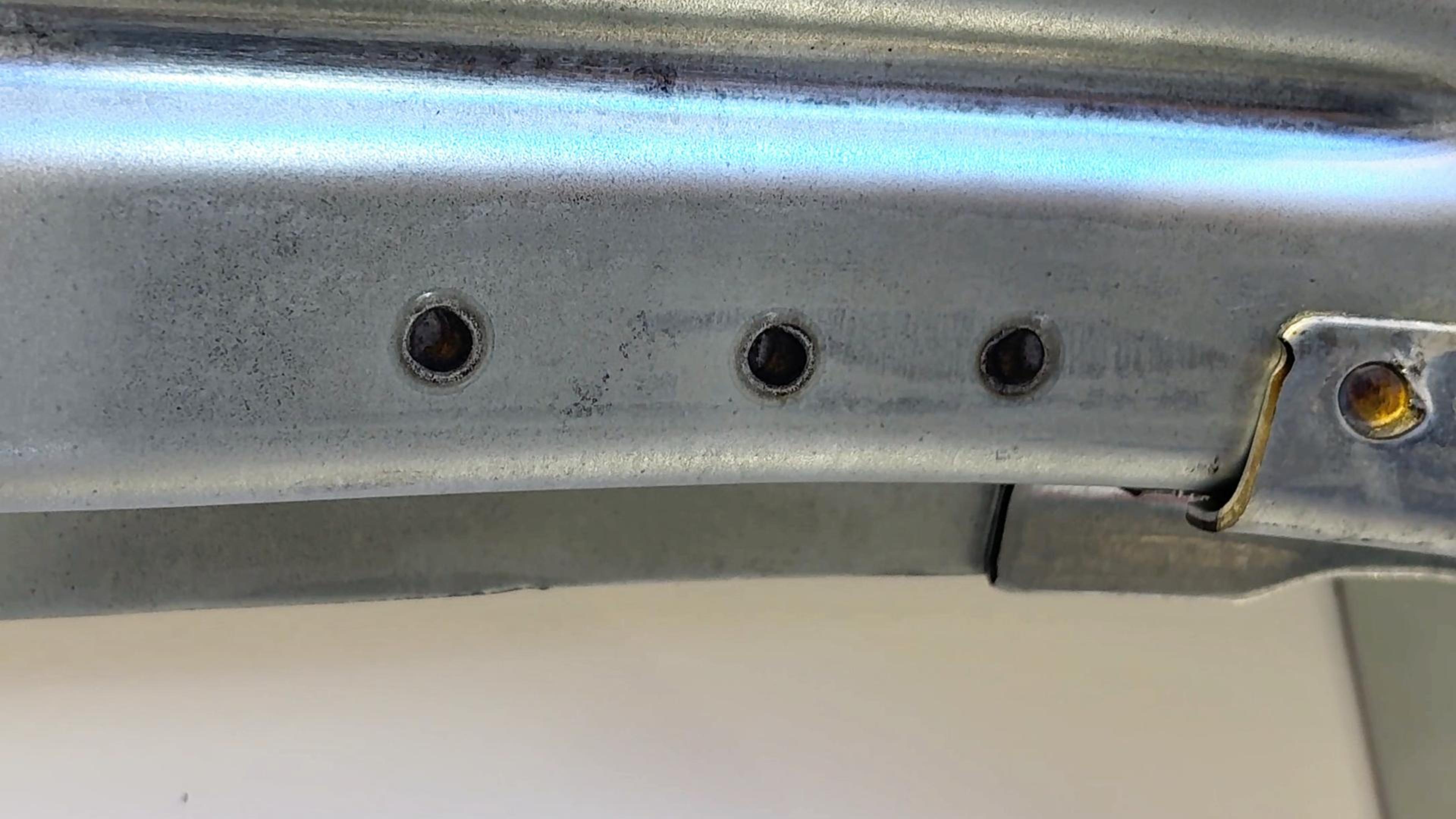
Material properties and sheet-stack configurations influence spot welding requirements.
5. Shop-Floor Considerations: Beyond the Datasheet
The differences between pneumatic and servo guns become clearer during daily production. Changeovers, electrode maintenance, and supply fluctuations can all affect how consistently a process runs.
Gun changeover
Servo gun: Position and motion sequences can be stored in the program and recalled with the welding recipe. The system can then establish the required electrode position and force-control conditions.
Pneumatic gun: After a gun change, the regulator settings and delivered force may need to be checked again. Results depend on the cylinder, seal condition, and air-line pressure.
Hongbai’s robot servo gun is designed for quick changeover across multiple robot brands, supporting production environments where equipment configuration changes regularly.
Electrode replacement and redressing
Electrode caps wear during production, and dressing changes their geometry and length. These changes can affect electrode contact and the relationship between gun position and the workpiece.
A servo gun can use programmable position control to compensate for changes in electrode length, provided the control strategy and calibration support that function. A conventional pneumatic gun generally has a fixed stroke endpoint, so compensation may require mechanical adjustment or changes to the setup.
Hongbai also supplies electrode-cap dressers and combination dresser-changer units, including automated units for robot guns. Together, these products support electrode maintenance as part of the overall welding process.
Air-pressure fluctuations
Air-pressure variation is an important consideration for pneumatic systems. Source pressure, line pressure drop, seal friction, and temperature can influence the force delivered by the cylinder.
An electric servo gun removes compressed air as the primary actuator, but its force performance still depends on the mechanical design, drive configuration, feedback arrangement, and calibration.
Where force consistency is critical, measurement is preferable to relying solely on the programmed setpoint.
Force verification and traceability
Hongbai’s gun force inspection unit supports:
- Upper and lower force deviation limits
- In-line and out-of-line alarms
- Peak-value hold
- Test reports and curves saved through a PC
- Traceability of force inspection results
This allows delivered force to be checked against defined acceptance limits. It also helps distinguish between a programmed target and the force actually measured during verification.
For production teams, that distinction matters: process settings define what the system is intended to do, while inspection data helps establish whether the equipment meets the required conditions.
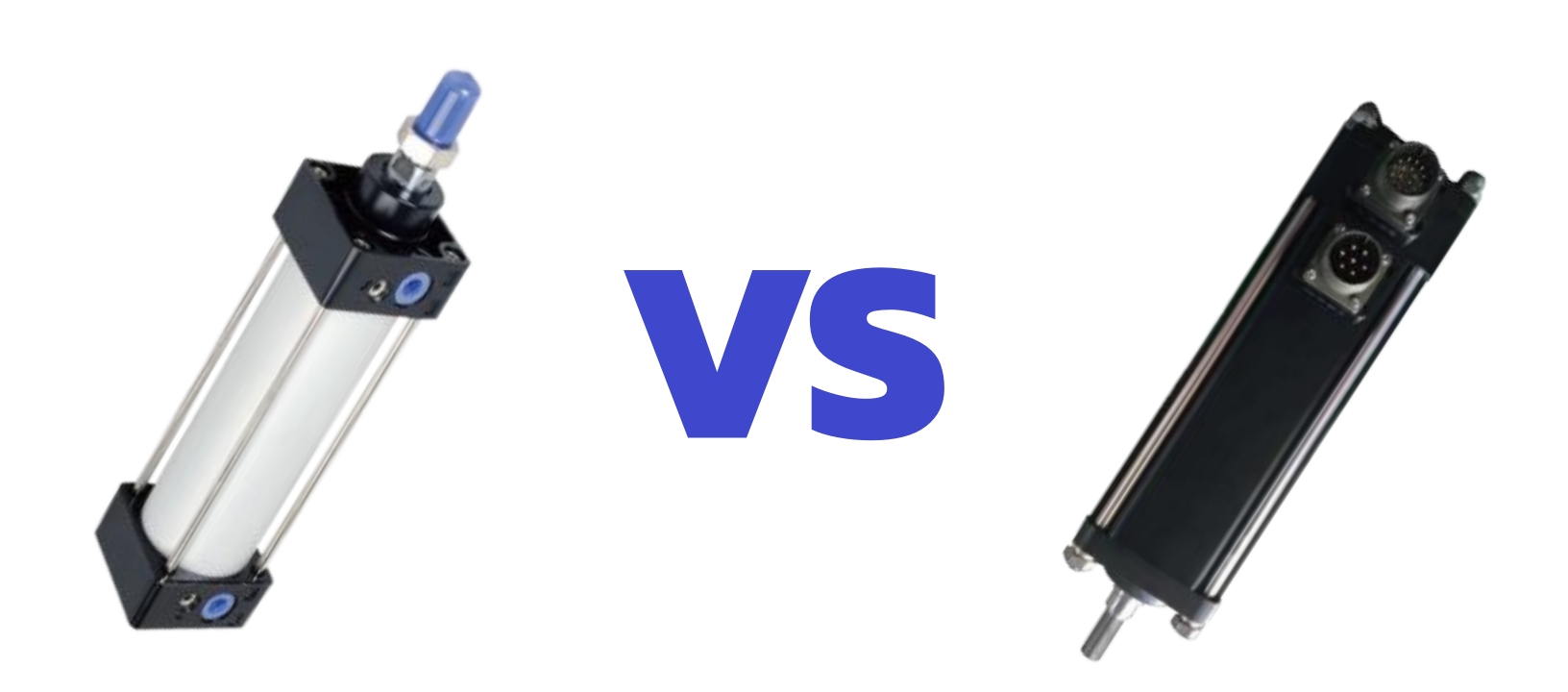
Comparing pneumatic and electric servo actuation principles for spot welding guns.
6. How to Choose: Servo or Pneumatic?
The right choice depends on the material, required control functions, production conditions, and total cost of ownership.
When to specify a servo gun
A servo gun deserves serious consideration when one or more of the following conditions apply:
Aluminum is part of the sheet stack.
The published 2+2 mm aluminum application uses 6,000 N force and 37,000 A current, with gun-arm force capability above 900 kgf and real-time force monitoring. These requirements make force control and validation especially important.
Force must be monitored or traced.
Where the production process requires force verification, documented inspection limits, and saved test curves, a suitable servo system combined with a force inspection unit can support the required control and traceability workflow.
Electrode position must be programmable.
Stations handling different sheet thicknesses or material combinations may benefit from programmable positioning and recipe-based motion control.
The air supply is unstable.
Long air lines, shared supply branches, or significant pressure fluctuations can complicate the control of pneumatic guns.
Changeovers are frequent.
Quick-change mounting and recipe-based setup can help simplify the transition between different production configurations.
The material stack is demanding.
High-strength steel, hot-formed steel, and multi-layer galvanized assemblies may require tighter control of electrode movement and force. The final choice should be based on validated welding results rather than actuator type alone.
When pneumatic remains the better buy
Pneumatic guns remain attractive in applications where their capabilities already meet the production requirements.
| Production condition | Why pneumatic may be suitable |
|---|---|
| Conventional cold-rolled or galvanized steel | A stable material and thickness range may not require programmable servo positioning |
| Stable air supply | Pressure-related variation can be managed within the validated process window |
| No per-weld force traceability requirement | Additional monitoring capability may not justify its cost |
| Wide process window | The simpler configuration may provide adequate performance |
| Tight capital budget | Lower initial investment can make pneumatic systems more economical |
Hongbai’s SHF pneumatic-servo configuration also offers adaptive control of welding force and current. Where those functions are sufficient, upgrading to a fully electric servo actuator may not deliver enough additional value to justify the investment.
Understanding the cost boundary
There is no universal price threshold at which servo becomes more economical than pneumatic. The crossover depends on three main cost categories:
- Equipment investment: The actuator, gun structure, controller, and welding transformer.
- Operating costs: Maintenance, consumables, setup time, and changeover requirements.
- Quality costs: Scrap, rework, downtime, and the cost of failing to meet process requirements.
For aluminum applications using 6,000 N force and 37,000 A current, the required process capability may justify the additional investment in a servo system.
For conventional cold-rolled steel operating within the parameter range listed for this equipment (around 80–150 kgf and 2.1–2.8 kA), a pneumatic gun may be the more economical choice if it consistently meets the validated process requirements
Hongbai’s available product information does not provide comparable unit prices or verified ROI figures for both actuator types. A meaningful cost comparison should therefore use actual line data, including scrap rates, rework costs, equipment pricing, and maintenance expenses.
7. Hongbai Technology: From Actuator Development to Production Integration
The difference between an actuator component and a production-ready welding solution lies in how the mechanical, electrical, and control systems work together.
Hongbai Technology’s approach combines hollow electric cylinder development, robot-gun integration, welding power control, and force verification.
7.1 Developing the hollow electric cylinder
Hongbai’s product portfolio includes hollow electric cylinders alongside robot spot welding systems, stud welding systems, spot welding equipment, and electrode dressing solutions.
The servo mechanism for a robotic spot welding gun can use a hollow electric cylinder developed specifically for this application. It can also work with mainstream third-party servo drives, avoiding dependence on a single drive ecosystem.
Two structural configurations are available:
- Linear electric cylinder: For installations suited to a straight-line arrangement.
- Retractable or fold-back electric cylinder: For applications where axial length and mounting space are more constrained.
This flexibility helps adapt the actuator layout to the robot and station design.
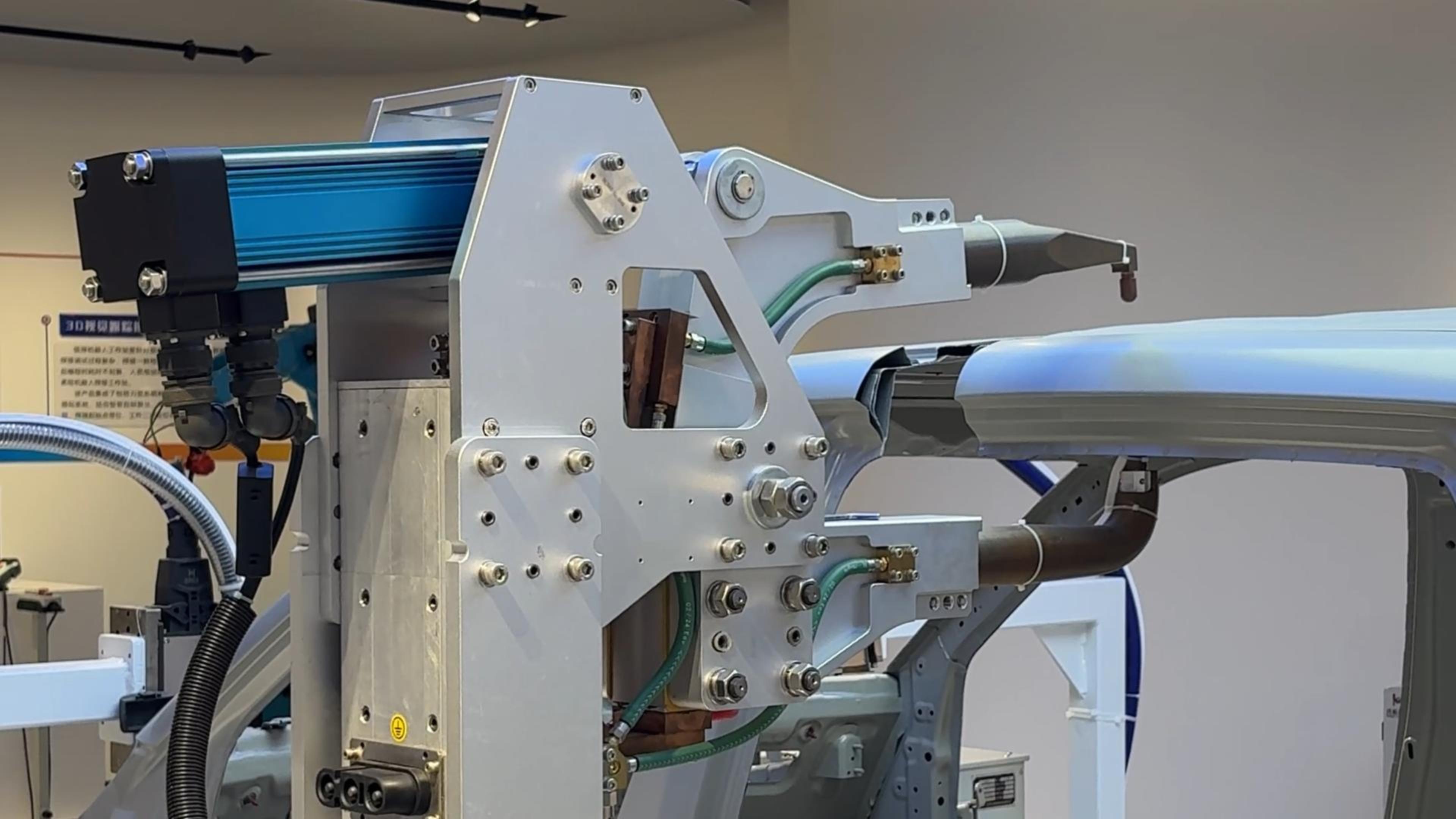
Hongbai Technology’s hollow electric cylinder is designed for integration into robotic spot welding guns.
7.2 Integrating the gun and transformer
A robot wrist must carry the mass of the gun and its associated components. Reducing this load is an important consideration in system integration.
Hongbai has developed compact transformer configurations intended to integrate the transformer and gun into a single assembly, helping reduce the load imposed on the robot.
For aluminum welding applications, the company offers a coordinated solution combining a 1 kHz or 2 kHz welding transformer with a hollow electric cylinder for new energy vehicle welding equipment.
7.3 Designing the gun body for rigidity
Programmable motion alone cannot guarantee accurate electrode movement if the gun structure deflects under load.
Hongbai’s robot gun bodies are machined from aviation aluminum and high-grade copper to combine structural rigidity, strength, low deformation, and electrical conductivity. The body design also incorporates multiple appearance patents.
Both C-type and X-type guns are available for integration with a range of domestic and international industrial robots, subject to the specific mounting and interface requirements.
7.4 Matching the control system to the application
The robot SHF spot welding system uses inverter technology, full-bridge soft switching, and closed-loop welding-current control. Its 10 kHz welding transformer is designed for compact size and high efficiency.
The MF controller, intended for applications including aluminum welding, has a specified inverter output of 1.8 kA at a 20% duty cycle. It supports transformers from multiple manufacturers and a maximum welding current of up to 60,000 A.
Communication options include Profinet, Profibus, and EtherNet-based interfaces, with configuration determined by customer and system requirements.
7.5 Production applications
Hongbai’s SHF spot welding systems and hollow-electric-cylinder servo guns have been used in projects associated with:
- FAW-Volkswagen: Jetta, Bora, Qingdao, and Sagitar spare-parts projects
- SAIC-Volkswagen: Tiguan longitudinal-beam, A-Plus, and Yeti projects
- Dongfeng Peugeot-Citroën: G25/G95 retrofit projects
- FAW-Haima, Dongfeng Passenger Vehicle, and BYD programs
These applications involve high-strength steel, multi-layer steel, and aluminum welding.
The robot servo gun has also been used on an SAIC-Volkswagen B+SUV main welding line and a GM D2UX platform line. The published 2+2 mm aluminum application, using 6,000 N force, 37,000 A current, and 180 ms weld time, is associated with new energy vehicle body aluminum welding.
Individual project configurations and material combinations should be confirmed against the relevant application records when citing a specific installation.
7.6 Verifying force on the production floor
The gun force inspection unit completes the control and verification workflow. It supports upper and lower deviation limits, in-line and out-of-line alarms, peak-value hold, and PC-based storage of test reports and curves.
The result is a more structured way to verify whether delivered force meets the required limits, rather than relying only on the actuator’s programmed settings.
For a production system using a hollow electric cylinder, this verification capability helps connect the intended force-control strategy with measurable results on the shop floor.
8. Choose the Actuation System Around the Process
Pneumatic and servo spot welding guns serve different production needs. Pneumatic guns establish electrode force through air pressure and can be highly cost-effective when the supply is stable and the process window is well established. Servo guns offer programmable electrode movement and can support more advanced force monitoring and control, depending on their configuration.
Material requirements should come first. Aluminum welding may demand high force and current, while high-strength steel and multi-layer galvanized assemblies place particular emphasis on stable electrode contact and process control. The appropriate welding schedule must always be validated for the actual material stack and joint.
Production conditions matter just as much. Gun changeovers, electrode replacement, dressing, and air-pressure variation all influence daily process stability. Programmable positioning, recipe-based control, and force verification can help address these challenges where they are needed.
Consider a servo gun when the process requires programmable positioning, demanding material combinations, more advanced force control, or documented force verification. A pneumatic gun may remain the better investment for conventional steel applications with stable air supply, limited changeovers, and no requirement for per-weld force traceability.
Hongbai Technology’s approach focuses on the complete system: developing hollow electric cylinders for robotic spot welding, supporting third-party servo drives, offering linear and fold-back configurations, integrating compact transformers, and matching gun mechanics with welding controllers. Its product portfolio also includes electrode dressing equipment and a force inspection unit to support maintenance and verification.
The objective is not simply to achieve a target setting. It is to establish a welding process that can be controlled, checked, and maintained throughout production.
Discuss Your Robotic Spot Welding Application
Selecting a welding gun starts with the material stack, required electrode force, cycle time, and robot integration constraints. These factors help determine whether a pneumatic or servo-driven solution is appropriate for your production line.
If you are evaluating a robotic spot welding system, share your material combination and application requirements with our team.