
2026-10-24
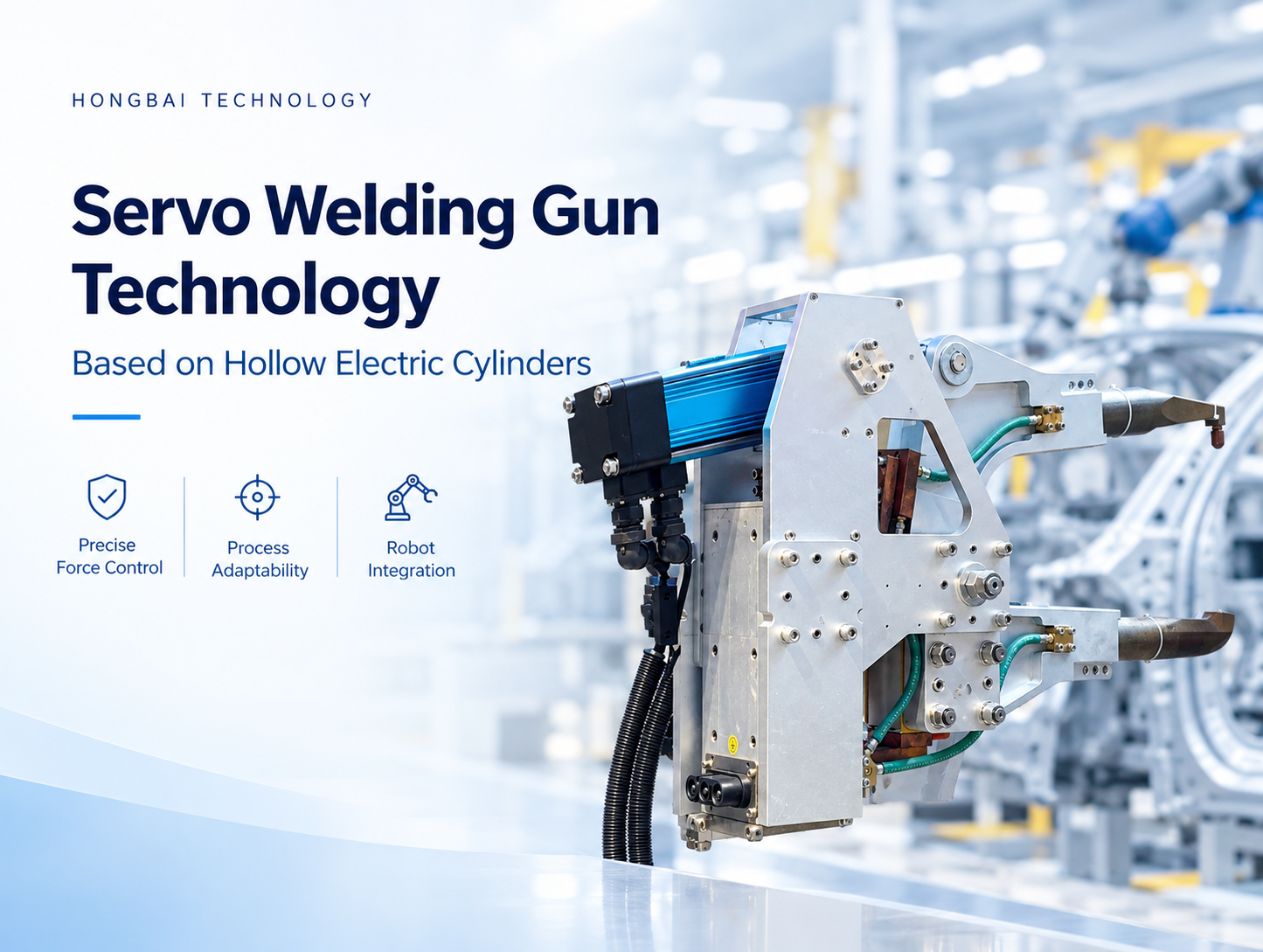
With a Focus on Hongbai Technology’s Servo Welding Gun Technology Based on Hollow Electric Cylinders Abstract Resistance spot welding is a core process in automotive body-in-white (BIW) manufacturing. The welding gun connects mechanical motion with the welding process, making force consistency and electrode movement critical to weld quality and production stability. Two common actuation approaches are pneumatic and electric servo. Pneumatic guns use compressed air to drive a cylinder and are well established, often with a lower initial investment. Servo-driven guns use a servo motor and electric cylinder to program electrode position, movement speed, and the force application sequence. The right choice depends on the material, process requirements, level of control, and integration with the wider production system. This article compares both technologies in terms of force control, process adaptability, and robot integration, with a focus on Hongbai Technology’s hollow electric cylinders for robotic spot welding in electric vehicle manufacturing. Applications include aluminum alloy, high-strength steel, and multi-sheet welding. 1. Force Consistency: The Numbers Behind the Process Force consistency is best evaluated against actual welding parameters. Hongbai’s SHF inverter DC spot welding system lists representative process parameters for steel applications, including: Electrode force: 80–150 kgf Welding current: 2.1–2.8 kA Weld time: 5–8 cycles Aluminum welding can require a substantially different process window. One published application uses the following parameters: Parameter Aluminum welding case Sheet stack 2+2 mm Electrode force 6,000 N Welding current 37,000 A Weld time 180 ms These figures describe a specific application, not universal settings for every material or joint. The practical question is whether the gun can maintain the required process conditions from the first weld to the four-thousandth weld of a production shift. Repeatability over time matters just as much as achieving a target value during initial setup. 2. Pneumatic Spot Welding Guns: A Proven…
2026-09-15
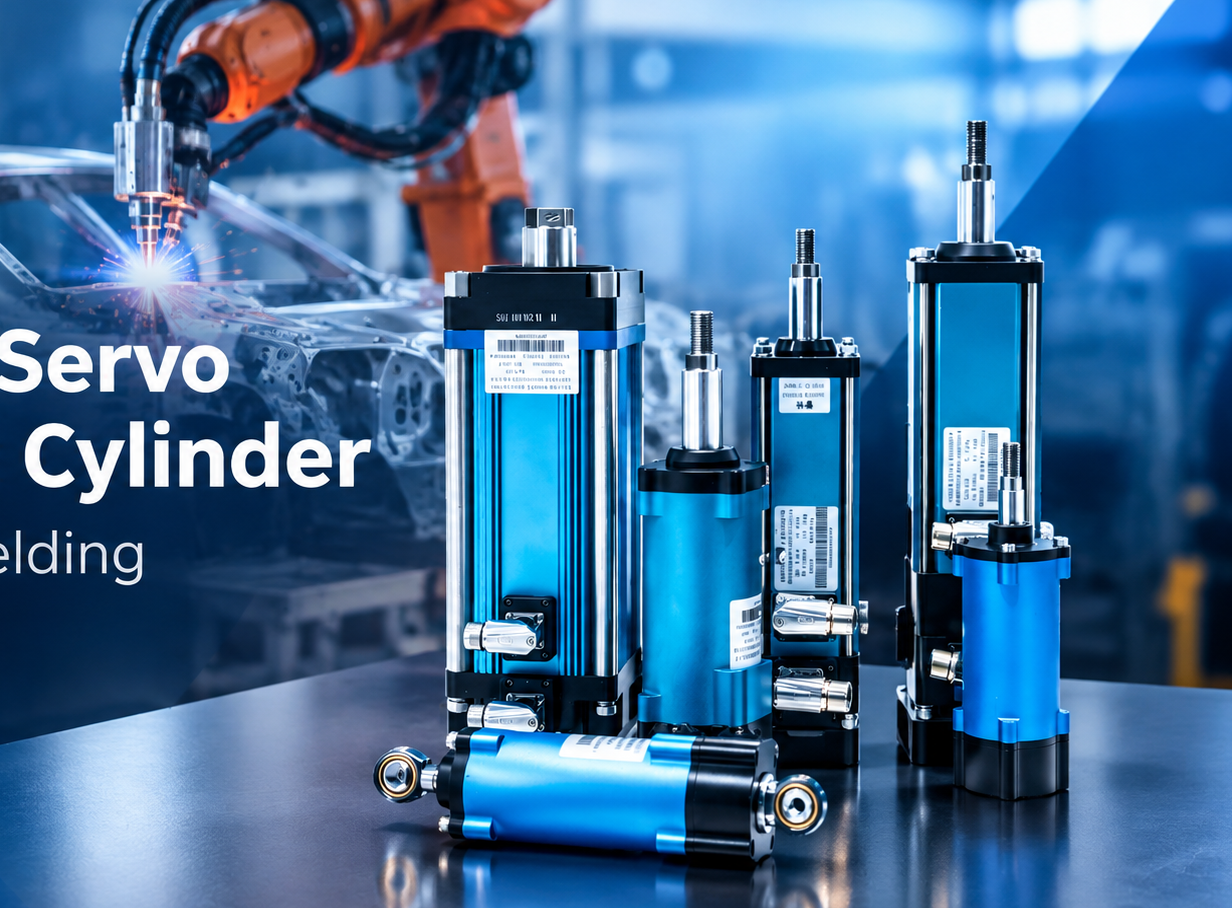
In robotic spot welding, welding current often gets most of the attention. But current alone does not determine whether a weld will be stable. Welding force, electrode movement, response speed and force repeatability also directly influence the welding process. This becomes even more important when one welding gun needs to handle different sheet thicknesses or when aluminum is introduced into automotive body structures. This is where the actuator inside the welding gun matters. A hollow servo electric cylinder combines servo actuation, precision screw transmission and position/force control into a compact linear unit. For robotic spot welding, its role goes beyond simply opening and closing the electrodes. It provides the mechanical and control foundation for accurate welding-force management and adaptive coordination between welding force and welding current. 1. What Is a Hollow Servo Electric Cylinder? 1. 什么是空心伺服电动气缸? A hollow servo electric cylinder is a linear actuator designed to convert servo motor rotation into controlled linear motion. Unlike a conventional actuator consisting of a servo motor, reduction mechanism and separate screw transmission, a linear integrated electric cylinder can place the motor and screw mechanism on the same axis. This shortens the transmission path and creates a more compact mechanical structure. For a robotic spot welding gun, this design has several practical benefits. The actuator needs to operate within a limited installation envelope while repeatedly generating high welding force. At the same time, the gun must move quickly enough to meet the cycle time of an automated production line. A shorter mechanical transmission path can help reduce unnecessary transmission components and provide a more direct connection between servo motion and electrode movement. This is one reason why a hollow servo electric cylinder for spot welding is particularly suitable for applications where compact installation, mechanical stiffness and dynamic response are important. 2. Why Does…