
2026-10-20
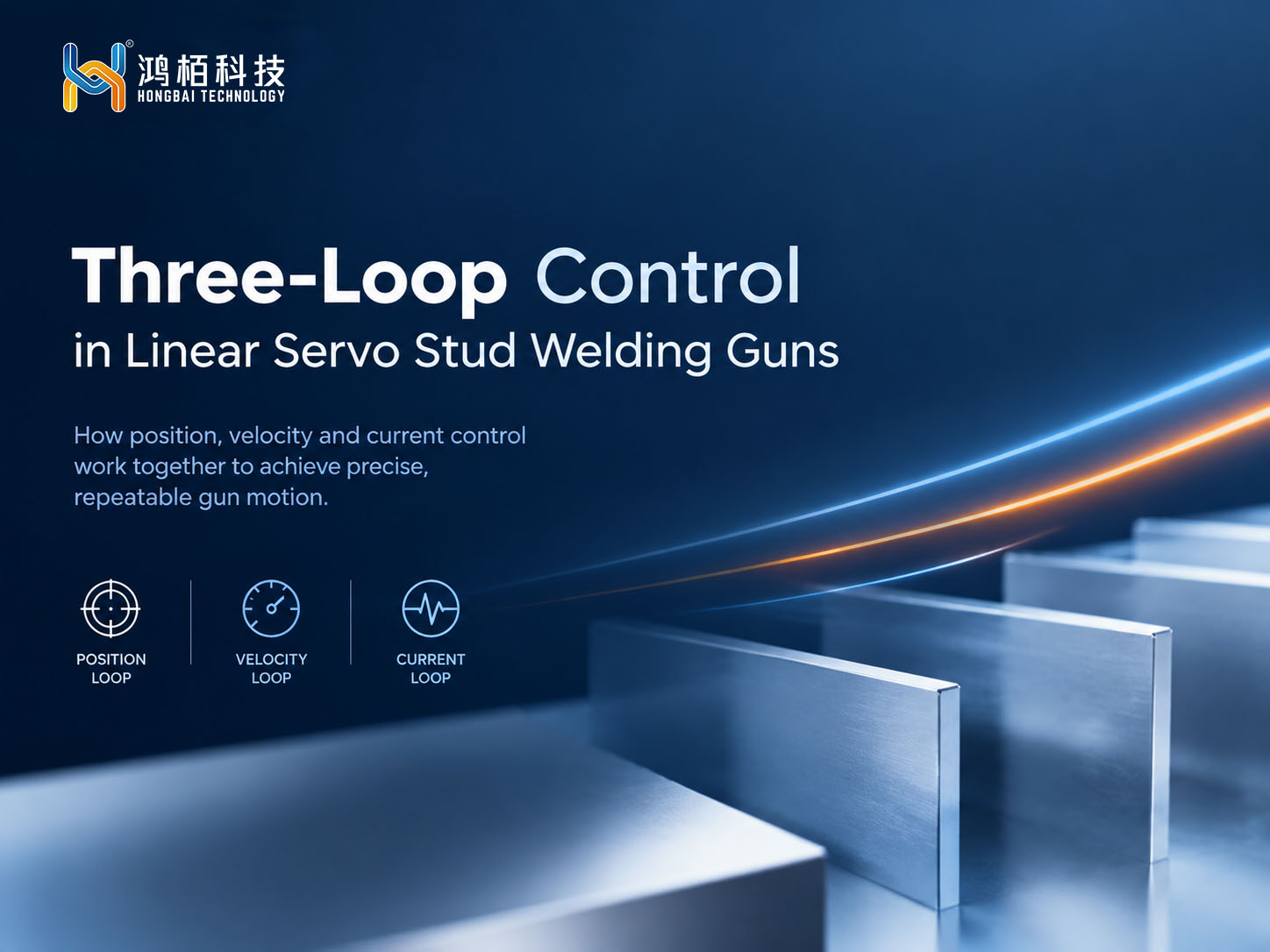
How position, velocity, and current control work together to achieve precise, repeatable gun motion. In automated stud welding, the welding gun must reach programmed positions, follow a defined motion profile, and respond quickly to changes in mechanical load. These requirements are managed by a cascaded three-loop servo control architecture: the position loop, velocity loop, and current loop. Hongbai’s servo control architecture combines MCU and FPGA processing to coordinate motion commands, feedback regulation, and gun movement throughout the welding cycle. 1. The Three Loops of Servo Control Position Loop: Accurate Positioning The outermost loop controls the position of the gun’s lifting mechanism using feedback from a high-resolution optical linear encoder. Its main functions are to track commanded positions, reduce positioning errors, and maintain the required position during designated stages of the welding cycle. Accurate positioning helps ensure that the gun follows the programmed movement sequence and establishes the intended lift conditions for the welding process. Velocity Loop: Motion Profile Tracking The velocity loop regulates motor speed according to the trajectory generated by the motion planner. Velocity feedback, derived from position measurements or dedicated estimation, enables the controller to correct tracking errors. The specified motion configuration includes: Maximum velocity: adjustable range of approximately 50–800 mm/s (recommended 400 mm/s) Acceleration: adjustable range of approximately 20–80 m/s² (recommended 50 m/s²) These are application-specific settings. Actual motion performance depends on the gun mechanism, moving mass, stroke, and load conditions. Current Loop: Fast Torque Response The innermost loop regulates servo motor phase current, which is closely related to motor torque. It enables the drive to respond to acceleration commands and changes in mechanical load. The specified servo-drive parameters are: Parameter Value Current-loop control period 20 μs Switching frequency 50 kHz Maximum current command/output ±20 A Specified current response 10 A within 40 μs These figures apply to the…
2026-10-13
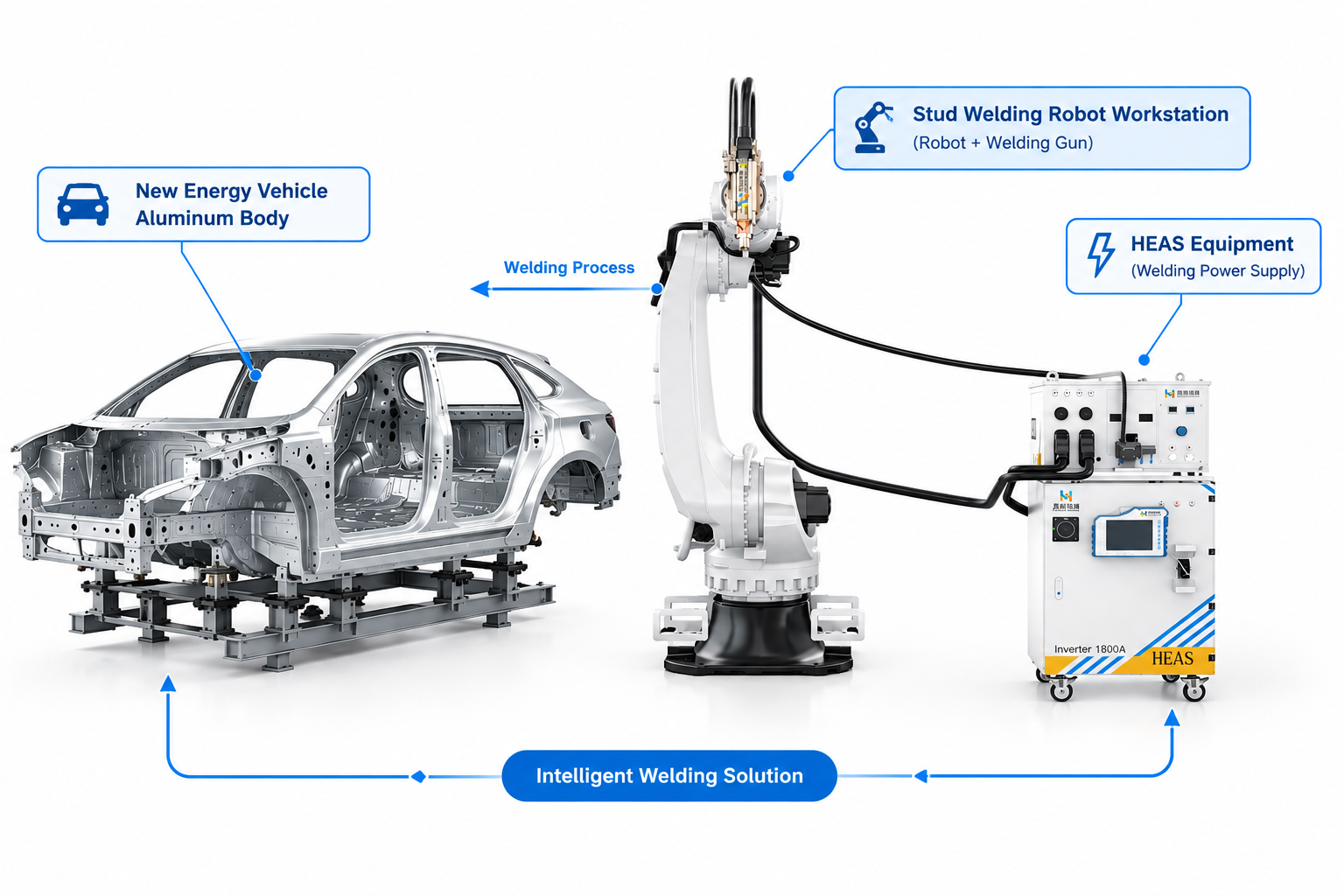
Aluminum welding is not just about increasing current With the rapid development of electric vehicles (EVs) and lightweight automotive structures, aluminum has become increasingly important in Body-in-White (BIW) manufacturing. However, welding aluminum is fundamentally different from welding steel. Many manufacturers find that a conventional DC stud welding system can achieve stable results on steel studs but struggles when applied to aluminum components. Problems such as unstable arc behavior, porosity, insufficient fusion, and low pull strength often occur. The reason is not simply insufficient welding current. The real challenge comes from the unique physical properties of aluminum: High thermal conductivity Low melting temperature High melting point oxide layer Rapid heat dissipation These characteristics determine that aluminum stud welding requires more precise control of heat input and current direction. This is why advanced AC/DC stud welding technology has become an important solution for aluminum automotive applications. Aluminum vs Steel: Why the Welding Process Is Completely Different Although aluminum and steel can both be joined through arc welding, their melting behavior is very different. Property Steel Aluminum Impact on Welding Melting point Approx. 1500℃ Approx. 660℃ Aluminum melts much earlier Oxide layer Thin oxide film Al₂O₃ oxide layer, melting point approx. 2050℃ Oxide layer is difficult to break Thermal conductivity Approx. 50 W/(m·K) Approx. 237 W/(m·K) Heat dissipates much faster Density 7.8 g/cm³ 2.7 g/cm³ Lightweight structure advantage Molten pool stability Relatively stable Difficult to maintain Requires precise heat control The biggest challenge is the aluminum oxide layer. Although aluminum itself melts at around 660℃, the aluminum oxide layer on the surface requires temperatures above 2000℃ to break down. This means: Before the aluminum base material can melt properly, the oxide layer must first be effectively removed. Without breaking this barrier, the stud and base material cannot form a strong metallurgical bond. Why…
2026-09-07
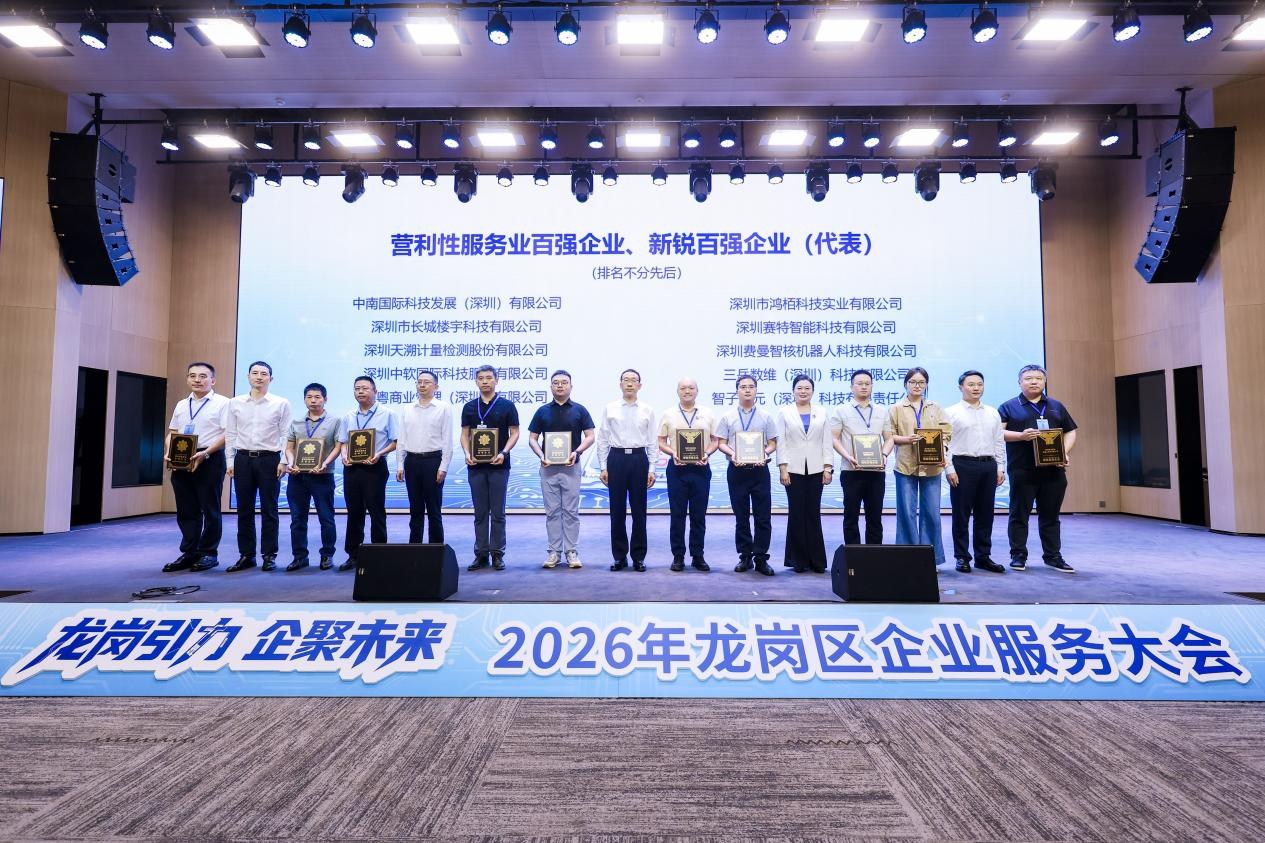
Shenzhen, China — September 2026 — Shenzhen Hongbai Technology Co., Ltd. has been recognized as one of the Top 100 Emerging Enterprises in Longgang District, following the announcement made at the 2026 Longgang Enterprise Service Conference. The conference was hosted by the CPC Longgang District Committee and the Longgang District Government. Hongbai Technology was selected for its strong innovation capabilities, solid technical expertise, and continued growth, marking another important recognition of the company’s development in Longgang and its more than 20 years of commitment to intelligent welding equipment. More Than 20 Years of Technology and Manufacturing Founded in 2003 and headquartered in Longgang District, Shenzhen, Hongbai Technology is a National High-Tech Enterprise and a National-Level Key “Little Giant” Enterprise, as well as a Guangdong Manufacturing Single Champion Enterprise and a standing council member of the China Welding Association. The company has also participated in national key scientific and technological research projects and National Torch Program projects. Hongbai Technology focuses on the R&D and manufacturing of intelligent equipment and customized industrial software, with capabilities covering the complete process from core technology development and precision manufacturing to system integration. With more than two decades of experience, the company has built particular expertise in automotive manufacturing and intelligent welding equipment, serving the evolving needs of modern manufacturing. Strong R&D and Engineering Capabilities Hongbai Technology currently has nearly 600 employees, with R&D personnel accounting for approximately 30% of its workforce. The company invests more than 15% of its annual sales revenue in R&D, continuously developing technologies for intelligent welding, automation, robotics, industrial software, and AI-enabled manufacturing. To date, Hongbai Technology has accumulated more than 200 patents and software copyrights across its domestic and international technology portfolio. The Guangdong Engineering Technology Research Center for Welding Equipment is also based at Hongbai Technology, further supporting the…