


Short-cycle stud welding is widely adopted in thin sheet joining scenarios such as automotive components and home appliance enclosures due to its high welding speed and low heat input. However, when welding 0.7mm thin galvanized sheets, cold welding defects of studs—characterized by incomplete weld fusion and insufficient bonding strength—are prone to occur. These defects not only compromise structural integrity but may also lead to subsequent assembly loosening and seal failure. Combining the characteristics of galvanized sheets and the process principle of short-cycle welding, this paper analyzes the causes of cold welding and proposes targeted solutions for the automotive manufacturing industry.
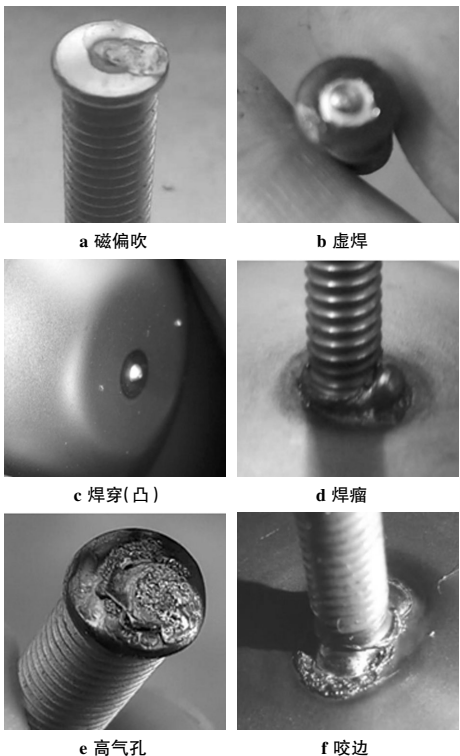
I. Core Causes of Cold Welding: Galvanized Coating Interference & Heat Input Imbalance
Short-cycle stud welding achieves metallurgical bonding between studs and base metals through instantaneous arc heating, rapid cooling, and precise heat input control. Yet the properties of the galvanized coating on 0.7mm sheets (melting point at 419℃, boiling point at 907℃, far lower than steel’s 1538℃) and the high thermal conductivity of thin sheets undermine welding stability in two key aspects:
1.Galvanized coating heat absorption and volatilization interference:
Under arc heating, the galvanized coating melts and volatilizes prior to the steel sheet, generating zinc vapor. Without proper coating removal or parameter setting, zinc vapor blocks direct contact between the arc and steel sheet, leading to insufficient molten pool temperature and incomplete fusion—i.e., cold welding. Meanwhile, zinc vapor is likely to cause spatter, damaging molten pool continuity.
2.Heat input imbalance:
The high thermal conductivity of 0.7mm thin sheets means excessive welding current or extended welding time can easily cause burn-through, while insufficient current or overly short time results in inadequate melting of studs and steel sheets, failing to form an effective fusion layer. Both scenarios trigger cold welding.
II. Systematic Solutions: Precise Control of Pretreatment, Parameters and Processes
To resolve cold welding of studs on 0.7mm galvanized sheets for automotive production, the core approach is to eliminate galvanized coating interference and match the thermal characteristics of thin sheets, implemented through three aspects: material pretreatment, welding parameter optimization and welding process control.
Video Showcase:https://www.linkedin.com/feed/update/urn:li:activity:7435609190217412608/
(1) Galvanized Sheet Pretreatment: Eliminate Coating Interference, Strengthen Interface Bonding Targeting the galvanized coating—the primary cause of cold welding—pretreatment is adopted to reduce its impact on welding, with tailored methods for batch and single-piece production in automotive workshops: Local cleaning: For single-piece or small-batch production, grind the welding area (diameter ≥1cm) with 80-120 mesh sandpaper or special zinc remover to completely remove the galvanized coating and expose fresh steel. Avoid steel wire brushes (prone to iron chip residue); clean dust with alcohol or acetone after grinding. Overall pretreatment: For mass production in automotive lines, adopt laser cleaning (high efficiency, no residue) or sandblasting (suitable for large areas). This not only removes the galvanized coating but also controls the steel sheet surface roughness at Ra≤12.5μm, enhancing the mechanical interlocking force between studs and steel sheets.
(2) Welding Parameter Optimization: Adapt to Thin Sheet and Coating Properties, Strictly Control Heat Input Following the principle of low temperature and rapid welding, adjust the core parameters (current, time, lift height) and arc initiation parameters of short-cycle stud welding to suit 0.7mm galvanized sheets for automotive applications:
Core parameters:
① Current: Refer to the formula I=(95-110)d (d = stud diameter in mm) and reduce by an additional 10%-15% (e.g., 550-600A recommended for M6 studs) to prevent overheating;
② Time: Refer to the formula t=(4-5)d (ms) and shorten to 20-25ms (e.g., 24ms for M6 studs) to reduce heat accumulation;
③ Lift height: Control at 1.0-1.2mm for servo welding guns to ensure stable arc and prevent zinc vapor from diffusing into the molten pool. Arc initiation parameters: Retain the pilot arc (arc initiation current 30-50A, duration 20-40ms) to pre-clean residual galvanized coating and surface oil on steel sheets, enhancing the fusion effect of the subsequent main arc.
(3) Process Control: Full-Link Assurance, Avoid Human and Equipment Errors in Automotive Production
Equipment calibration: Regularly verify the verticality (deviation ≤±2°) and clamping force of welding guns to prevent arc deviation caused by loose studs. Inspect grounding circuits to ensure grounding resistance ≤10Ω and stable current transmission—critical for consistent welding quality in automotive mass production.
Personnel operation: Require operators to implement the “check-adjust-verify” process: inspect the galvanized coating cleaning effect; conduct test welding before parameter adjustment and first-piece verification for full molten pool and no backside burn-through; inspect weld appearance (no blowholes, slag inclusions) and shear strength (refer to GB/T 10045-2018, strength ≥80% of the base metal), in line with automotive manufacturing quality standards.
III. Effect Verification and Parameter Iteration: Data-Driven Welding Quality Assurance for Automotive Industry
After parameter adjustment, first-piece testing is required to verify the effect for automotive production. Taking M6 studs welded at 600A and 24ms as an example, three criteria must be met:
Appearance: Full stud forming, no backside burn-through and no blackening of the galvanized coating;
Strength: No fracture after 90° hammer bending, shear strength ≥400MPa (compliant with automotive industry standards);
Stability: Cold welding rate ≤1% for 10 consecutive welds, meeting the consistency requirements of automotive mass production. If cold welding still occurs, fine-tune parameters slightly (current ±20A, time ±1ms), or adopt AI vision systems such as the YOLOv8 model by Hongbai Technology to monitor molten pool morphology in real time and achieve closed-loop process optimization for automotive welding lines.
Conclusion
The root causes of stud cold welding on 0.7mm galvanized sheets in automotive welding are galvanized coating interference and heat input imbalance. The combined solution of galvanized coating removal via pretreatment, parameter adaptation to thin sheets and full-process strict control can effectively resolve this issue. The core is to precisely match the instantaneous heat input of short-cycle welding with the low heat resistance of galvanized sheets, ultimately achieving the dual goals of firm bonding and no appearance damage for thin sheet welding— a key direction for the development of high-precision, high-reliability thin sheet stud welding in the automotive manufacturing industry.