
2026-08-26
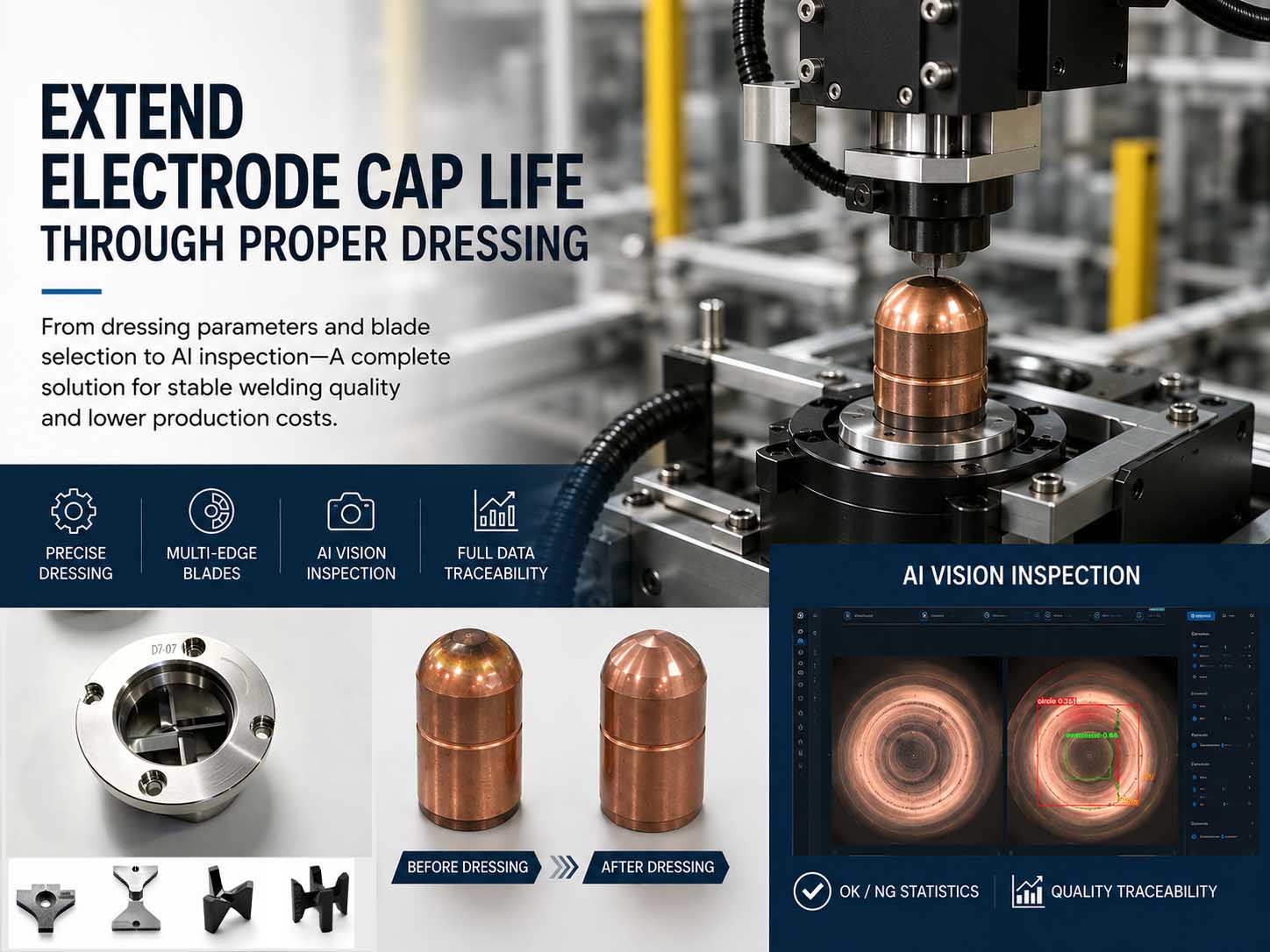
An electrode cap is a critical consumable component in resistance spot welding. It directly participates in the welding process and plays an important role in maintaining stable electrical and mechanical conditions at the weld interface. In automotive manufacturing, Body-in-White (BIW) production and other high-volume automated spot welding applications, the condition of the electrode cap can directly affect weld quality, process stability and production efficiency. As the number of welds increases, the working face of the electrode cap gradually becomes worn, deformed or contaminated. Copper pickup, surface marks and other irregularities may also develop during continuous welding. Electrode cap dressing is therefore used to remove the damaged surface layer and restore the required geometry and working condition of the electrode cap. However, electrode cap dressing is not simply a matter of removing as much material as possible.Insufficient dressing may leave damaged areas on the working face, while excessive dressing unnecessarily removes electrode material and reduces the number of effective dressing cycles available from a single electrode cap. Therefore, controlling the dressing amount, selecting the right dressing cutter, performing routine maintenance and using intelligent inspection to identify abnormalities are all important for extending electrode cap life. In practical production applications, electrode cap dressing performance can be systematically improved through four key areas. 1. Control the Dressing Amount to Avoid Excessive Material Removal The primary objective of electrode cap dressing is to remove damaged material and restore the required working face—not to remove more material than necessary. If the dressing amount is insufficient, defects generated during welding may remain on the electrode face, including black marks, raised areas, localized wear and uneven surfaces. These conditions can alter current density and electrode force distribution, potentially affecting weld consistency. On the other hand, excessive dressing removes a larger amount of otherwise usable electrode material. This…
2026-07-16
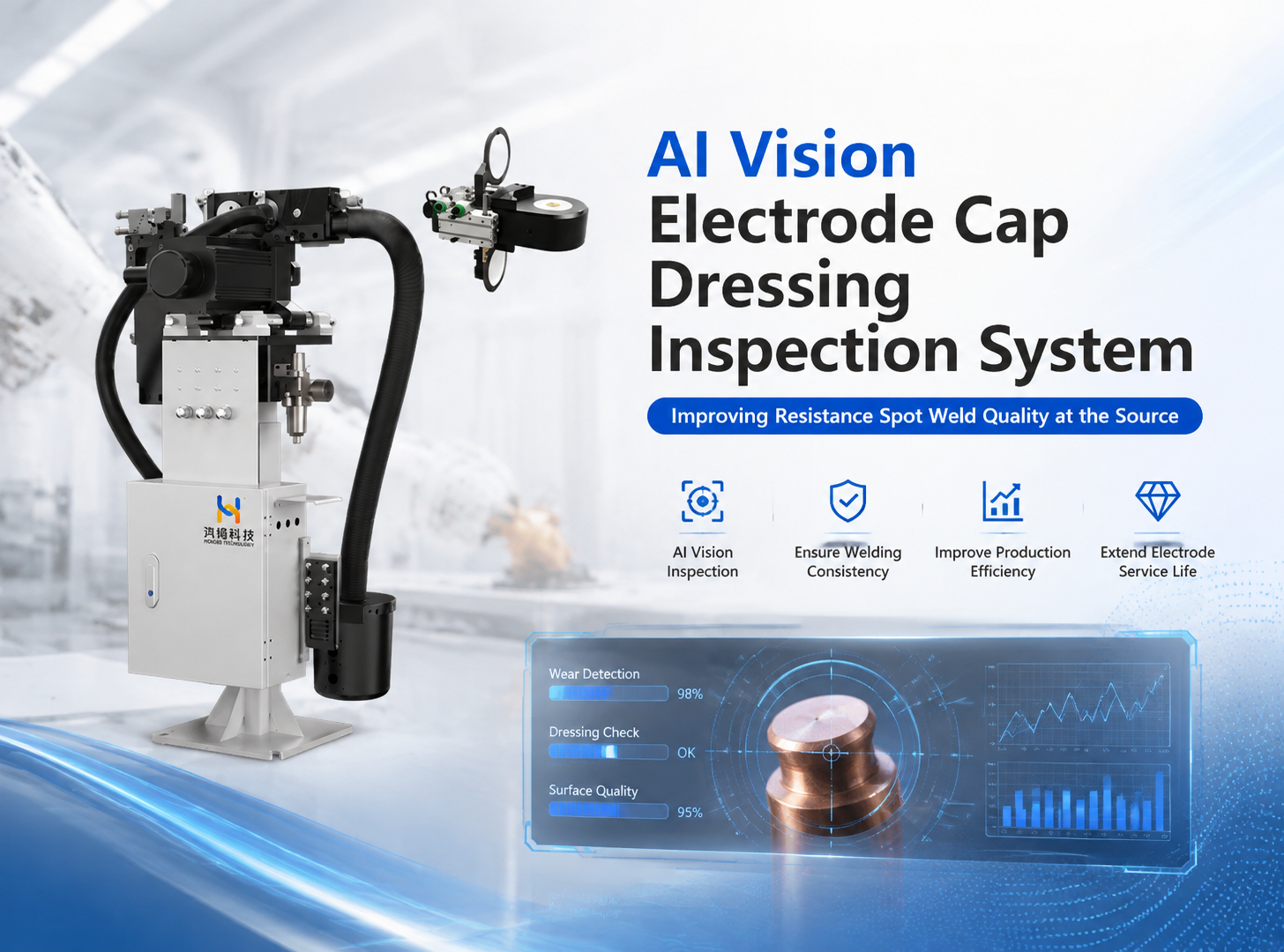
In automotive Body-in-White (BIW) production, resistance spot weld quality has a direct impact on vehicle structural integrity, safety, and durability. When investigating weld defects, manufacturers often focus on welding current, electrode force, and weld time. However, one critical factor affecting weld consistency is frequently overlooked—the condition of the electrode cap. Field experience has shown that inconsistent electrode cap dressing quality is one of the major causes of expulsion, undersized weld nuggets, weak welds, and poor weld consistency. As smart manufacturing continues to evolve, traditional maintenance methods based on manual inspection or fixed dressing intervals can no longer meet the requirements of high-speed automated production. AI-powered machine vision is rapidly becoming a new standard for resistance spot welding quality control. Why Is Electrode Cap Dressing So Important? The electrode cap directly influences current distribution and the electrical contact condition during resistance spot welding. After dressing, defects such as: • Off-center electrode face • Out-of-round electrode face • Copper pickup • Pits or raised surfaces • Incomplete or uneven dressing may result in: • Uneven current density • Inconsistent weld nugget size • Increased weld expulsion • Reduced weld strength • Shortened electrode life Therefore, electrode cap dressing quality affects not only electrode service life, but also the stability and consistency of every weld. Challenges with Conventional Electrode Dressing Many welding lines still rely on traditional electrode maintenance methods, including: • Dressing after a fixed number of welds • Manual visual inspection • Scheduled electrode cap replacement These methods present several limitations: • Inspection results depend heavily on operator experience. • Small surface defects are difficult to detect. • Premature dressing increases consumable costs, while delayed dressing compromises weld quality. • Lack of digital records makes root cause analysis and quality traceability difficult. For today’s high-volume automated welding lines, these approaches are…