
2026-09-18
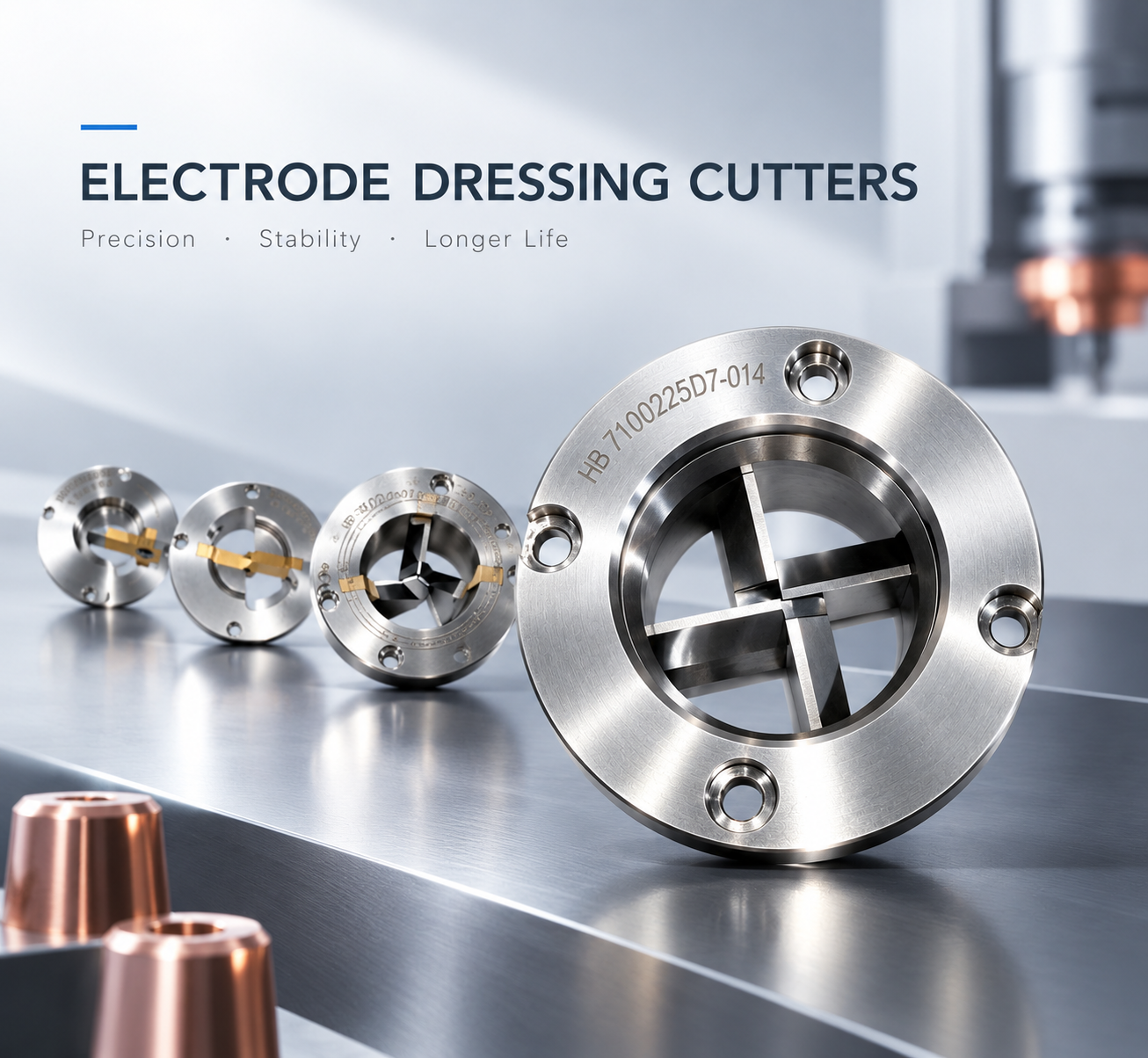
In Body-in-White (BIW) production, electrode cap dressing may seem like a relatively small operation. In practice, however, it has a direct connection with electrode cap life, weld consistency, production cycle time, and maintenance cost. Many problems on the shop floor do not start with a failure of the electrode dresser itself. They often develop gradually from the cutter: an unsuitable cutter selection, a mismatch between the cutter and dressing parameters, or continued use after the cutting edge has worn. The result may eventually appear as an abnormal electrode face, inconsistent dressing, or changes in weld quality. From our experience with electrode cap dressing applications, we believe that an electrode dressing cutter should not be selected based only on purchase price or theoretical tool life. The cutter, electrode cap, dressing machine, and process parameters need to work as one matched system. This is one of the key factors we consider when developing electrode cap dressing solutions. 1. Why Does an Electrode Dressing Cutter Affect Weld Quality? After continuous welding, the electrode cap gradually develops wear, deformation, and material buildup on its working face. If the electrode cap is not dressed at the appropriate interval, its geometry changes. This can affect the contact area and current density during resistance spot welding. The purpose of electrode cap dressing is not simply to “remove a layer” from the cap. The objective is to restore a stable: Electrode face diameter Face geometry Concentricity Surface condition Contact geometry The dressing cutter is the component that directly creates this geometry. When the cutter condition changes, the dressing result changes with it. For example, as a cutting edge becomes dull, the actual cutting condition may change even when spindle speed, dressing pressure, and dressing time remain unchanged. On the production line, this may appear as: Changes in electrode…
2026-08-11
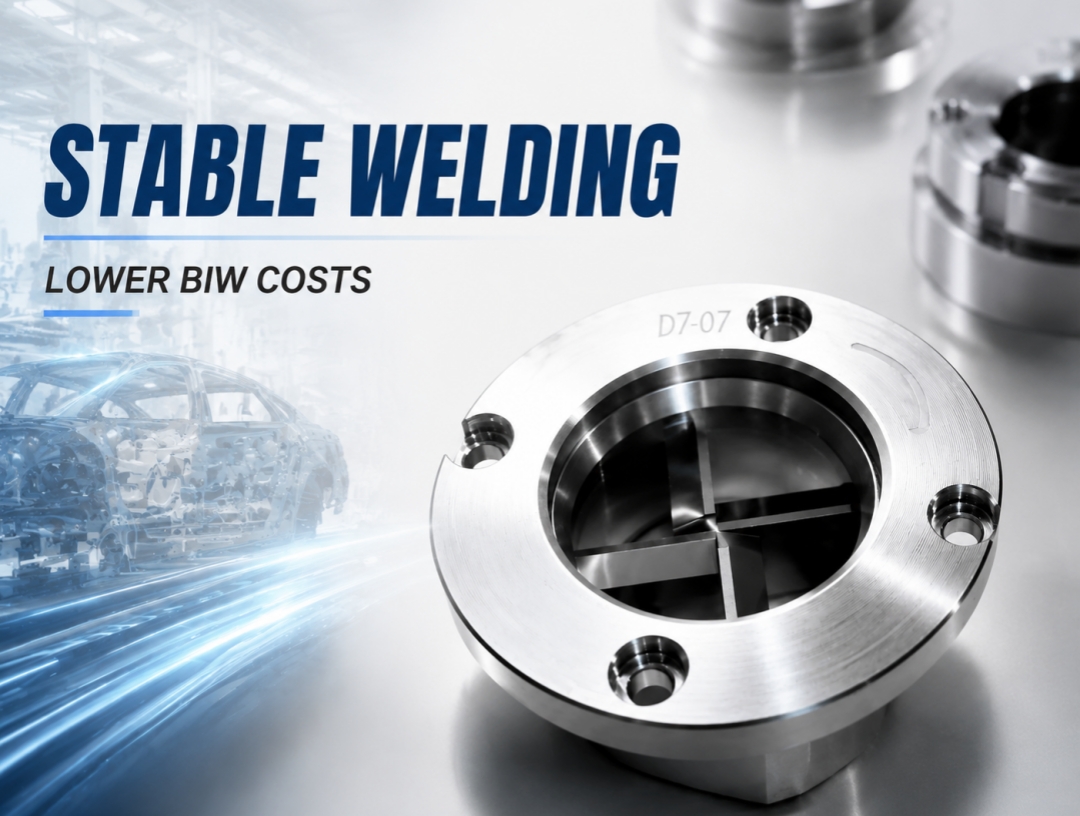
In the demanding environment of automotive Body-in-White (BIW) welding, electrode cap dressing blades may appear small, but they play a critical role in determining weld spot quality, electrode cap service life, and overall production cost. Behind a seemingly simple blade lies a complete chain of engineering expertise, including material science, precision manufacturing, and strict quality management. With decades of experience in welding equipment development, Shenzhen Hongbai Technology Co., Ltd. has successfully transformed its independently developed electrode cap dressing blades from ordinary consumable components into precision-engineered products integrating advanced structural design, high-accuracy manufacturing processes, and international certification standards. 1. Design Philosophy: A Fundamental Shift from “Cutting” to “Dressing” Traditional electrode cap dressing is essentially a cutting process, where sharp cutting edges forcibly remove the copper-aluminum alloy layer accumulated on the electrode cap surface. Although this method is straightforward, it has two major limitations: High material removal rate (approximately 0.08 mm per dressing cycle) Short blade service life (only around 8,000–12,000 dressing cycles for single-edge blades) Hongbai’s dressing blade design achieves a breakthrough by redefining the fundamental dressing principle. 1.1 Multi-Edge Structure: From Single Cutting to Multi-Stage Dressing The core innovation of Hongbai dressing blades lies in the multi-edge structure. Currently, Hongbai provides four blade configurations. Taking the four-edge blade as an example, its four cutting edges are arranged at 90-degree intervals. During the dressing process, multiple edges work simultaneously, distributing cutting forces across several contact points. This reduces the material removal amount per dressing cycle to only 0.01–0.035 mm, bringing the process closer to precision dressing rather than conventional cutting. The direct benefits include: Reduced electrode cap material consumption Extended electrode cap service life Increased welding capacity from approximately 3,000 weld spots to 6,000 weld spots per pair of electrode caps 1.2 Four-Edge Right-Angle Design: 90° Geometry and 0.01 mm Dressing…