
2026-09-21
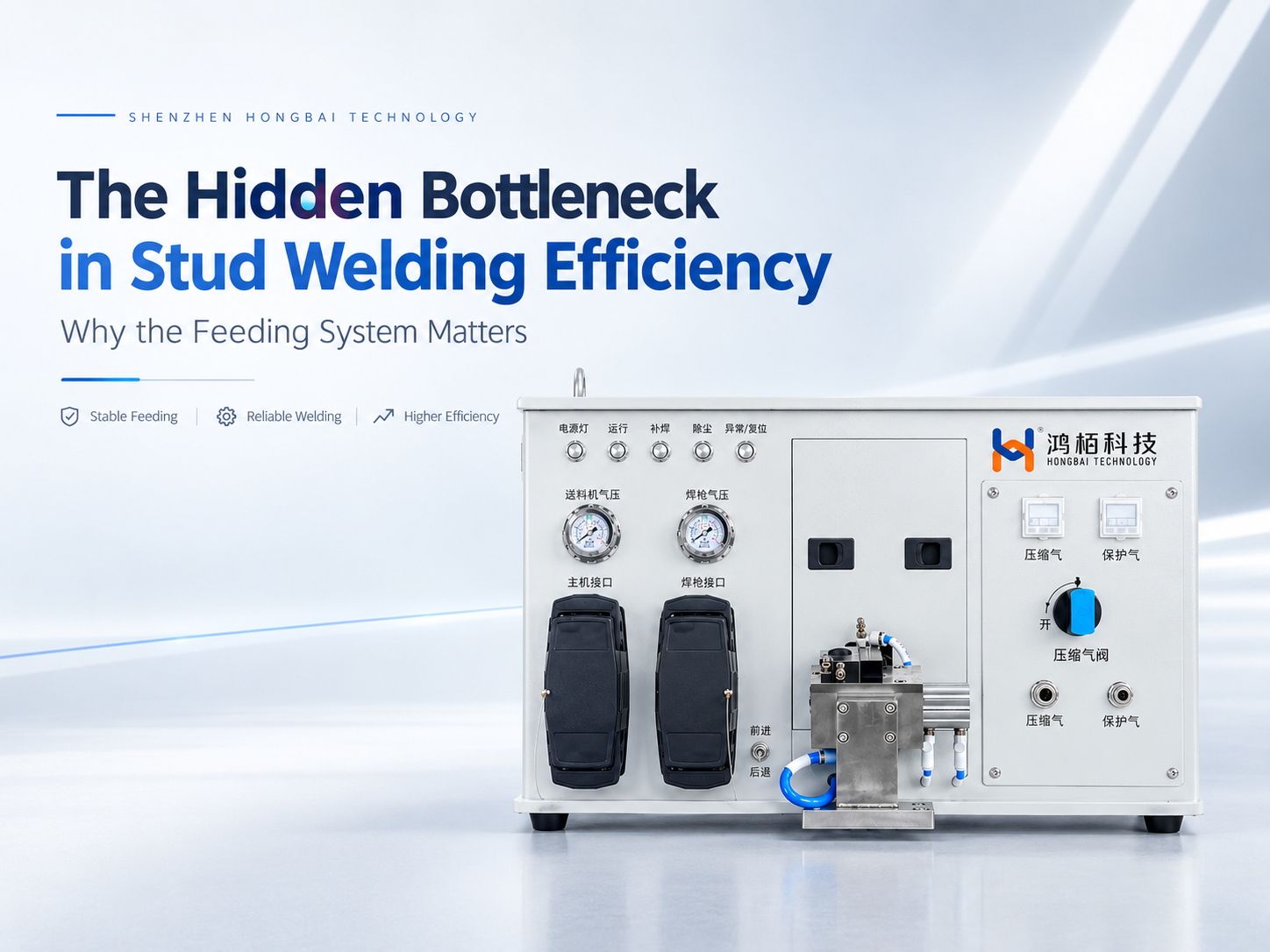
In automated stud welding, manufacturers naturally focus on the welding power source, weld gun, and robot. Welding current, weld time, positioning accuracy, and robot speed are all critical parameters. Yet when a system moves into continuous production, another factor often has a much greater impact on the actual production cycle than expected: how reliably the next stud is prepared for welding. A complete automated stud welding cycle involves much more than the welding operation itself. The stud must be separated, conveyed, positioned, loaded into the weld gun, and finally welded. If the feeding process is delayed or interrupted, the welding system and robot may have to wait, regardless of how fast the welding process itself can run. This is why the feeding system should not be treated simply as an accessory to a stud welding machine. In a high-volume production environment, it is part of the process that determines whether the entire welding cycle can continue smoothly. The goal of an automatic stud feeding system is not simply to feed a stud. It is to make sure the right stud is ready, in the right position, at the right time. 01 | When Welding Is Fast, Why Can Production Throughput Still Fall Short? When evaluating an automated stud welding system, welding time is usually one of the first parameters engineers consider. However, high performance at the welding stage does not automatically translate into high production throughput. The reason is that the actual production cycle includes several operations before the weld is made: Stud Separation → Feeding → Stud Positioning → Gun Loading → Robot Positioning → Welding Once one stud has been welded, the robot is ready to move to the next weld location. At the same time, the next stud needs to be prepared. If the robot reaches the…
2026-08-22
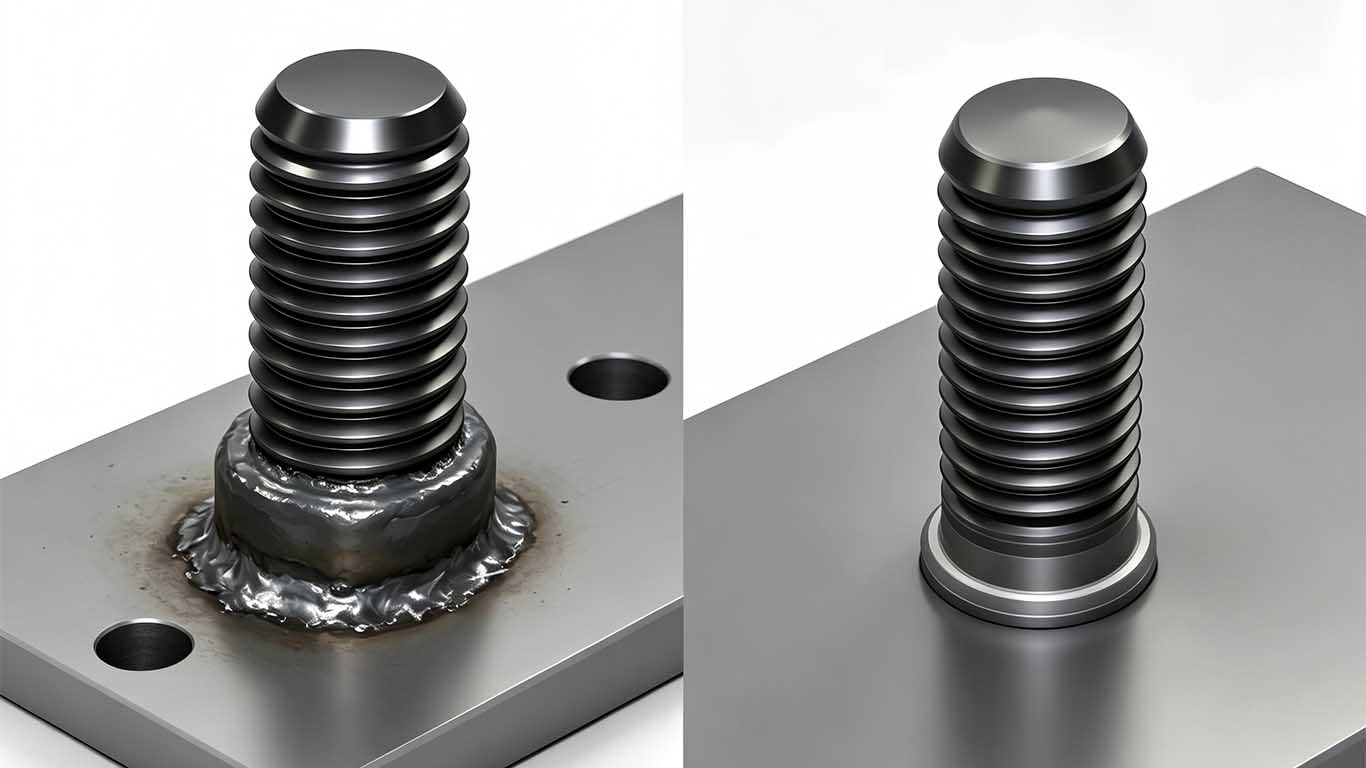
1. Start with the Application: How to Choose the Right Stud Welding Machine? As automotive manufacturing, sheet metal fabrication, appliance production, machinery manufacturing, and industrial automation continue to evolve, stud welding is moving from traditional manual operations toward automated, robotic, and digital production. For manufacturers, selecting a stud welding machine is no longer simply about comparing maximum welding current. Stud diameter, workpiece material, sheet thickness, required joint strength, production cycle time, and automation level all influence the final equipment selection. As a company specializing in intelligent welding equipment and industrial automation, Hongbai Technology has been developing stud welding technology since 2003. Its product portfolio covers capacitor discharge stud welding, short-cycle drawn arc welding, AC/DC stud welding, CNC automatic stud welding platforms, and robotic stud welding systems. Depending on the material, stud specification, and production method, Hongbai can provide complete solutions covering welding power sources, servo welding guns, automatic stud feeders, robots, and CNC platforms. Before selecting a machine, therefore, the first question should be: What type of stud welding process does your application actually require? 2. Choose the Welding Process Before Choosing the Machine Different stud welding processes operate differently and therefore have different requirements for the welding power source and welding gun. The two main processes used in industrial production are capacitor discharge stud welding and drawn arc stud welding. Capacitor discharge stud welding uses stored capacitor energy to complete the weld within an extremely short period, typically around 1–3 ms. This results in low heat input and minimal thermal impact on thin sheets. It is particularly suitable for small-diameter studs, typically 3–8 mm, thin sheet applications, and components where backside deformation must be minimized. Drawn arc stud welding, on the other hand, uses the welding gun to lift the stud and create an arc between the stud and…