
2026-09-05
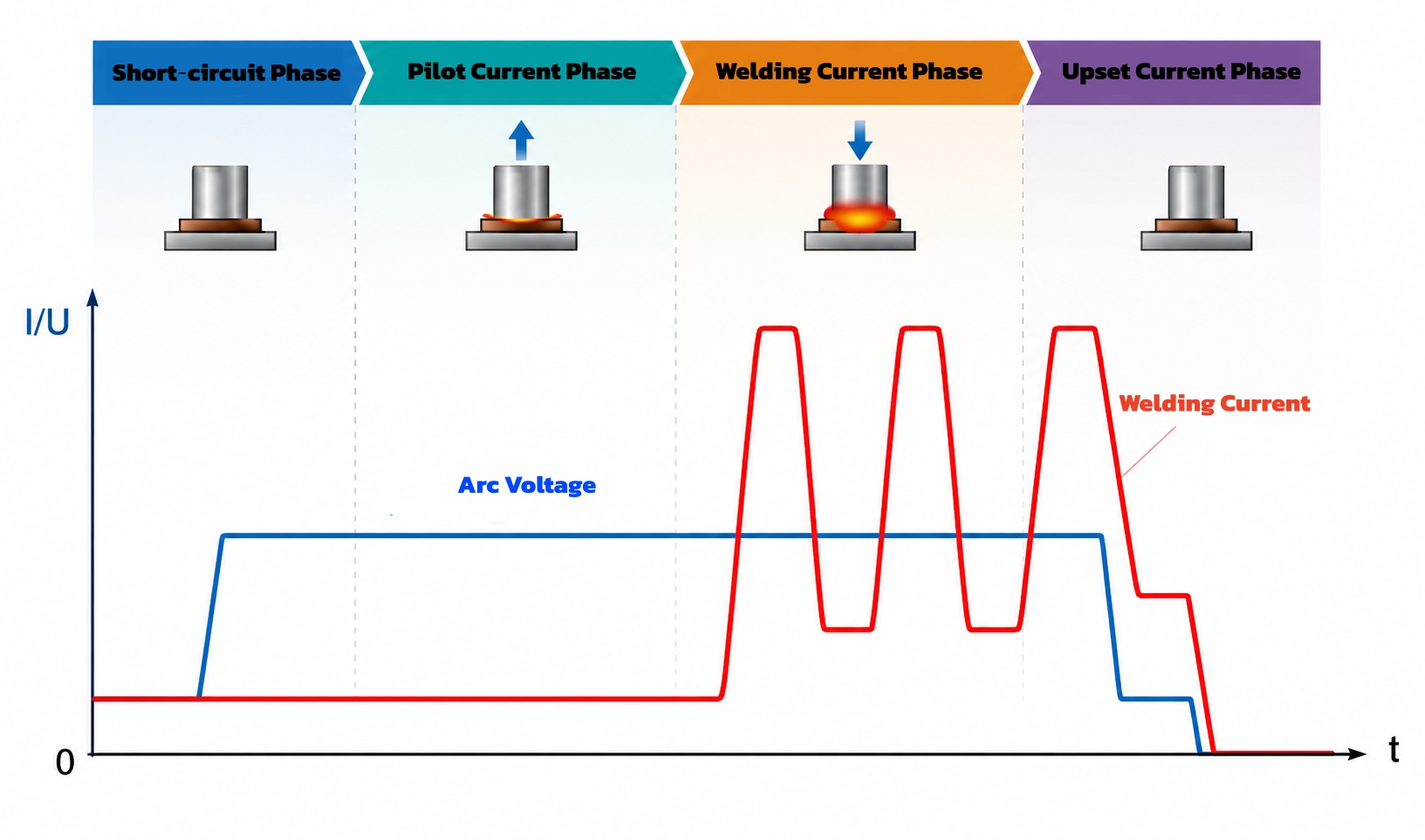
Why Monitor Penetration in Stud Welding? In stud welding, the result is not simply about whether the stud is attached to the workpiece. When the stud tip and workpiece surface are melted, sufficient fusion must be achieved to form a reliable joint. Insufficient fusion can affect joint strength, while excessive heat input may cause localized overheating or even burn-through when welding thin sheet metal. In conventional production, engineers typically control the process through parameters such as welding current, welding time, and lift height, followed by visual inspection and sampling-based destructive testing. But these methods do not always answer a more direct question: What actually happened to this individual stud during the weld? This is where the penetration monitoring function of the PIDS Series Stud Welding System comes into play. The system monitors the change in stud position before and after welding, calculates the corresponding penetration value, and provides the result on the operator interface after the weld is completed. Penetration therefore becomes a measurable process variable rather than something that can only be evaluated indirectly through post-weld inspection. 1. How Does PIDS Penetration Monitoring Work? 1.1 The Principle Is Measurement, Not Visual Inspection PIDS penetration monitoring does not rely on a camera to directly observe the molten pool after welding. Instead, it is based on the change in stud position before and after the welding cycle. Before welding begins, the system establishes the initial stud position as a reference. Once the arc is initiated, the stud tip and workpiece surface melt to form a molten pool. The stud then moves into the molten pool and the weld is completed. After welding, the system records the final stud position. The change between the initial and final positions is then used to calculate the corresponding penetration value. The process can be simplified…