
2026-08-10
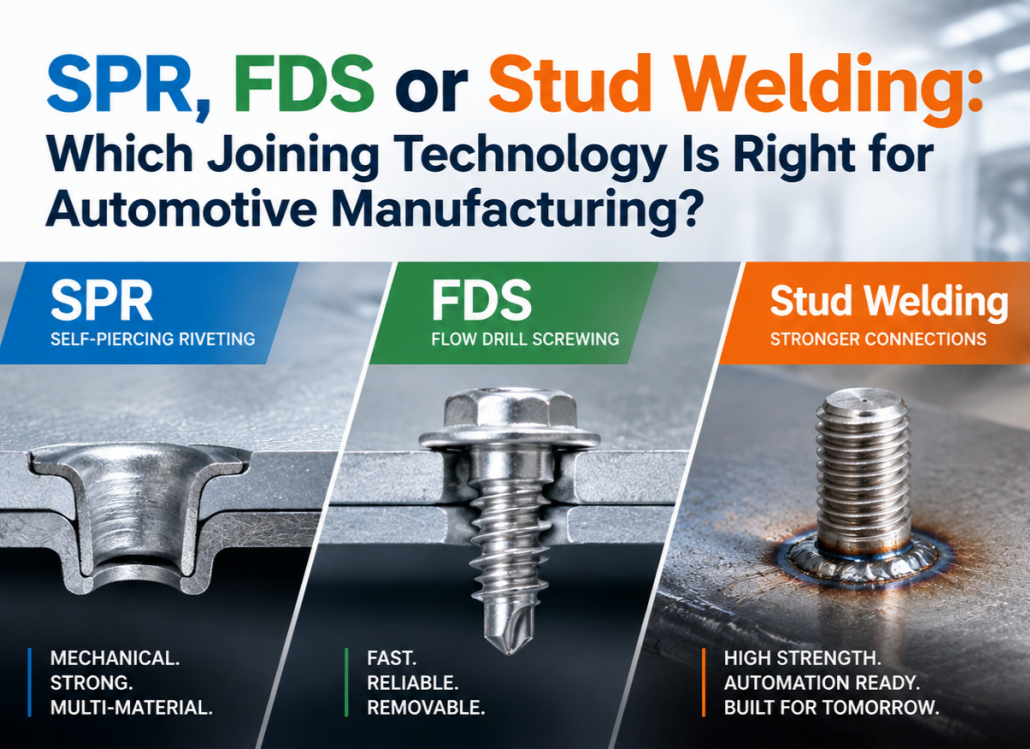
Introduction: The Evolution of Joining Technology in Modern Manufacturing For decades, resistance spot welding and traditional welding processes have been widely used in automotive manufacturing and industrial production. However, the rapid development of electric vehicles (EVs), lightweight structures, and multi-material applications has created new challenges for joining technologies. Modern manufacturing is no longer limited to single-material structures. Increasingly, manufacturers are working with combinations of: High-strength steel (AHSS) Aluminum alloys Galvanized steel Composite materials Multi-layer structures These materials provide significant advantages in weight reduction, energy efficiency, and product performance. However, they also introduce new challenges, including: Material compatibility issues Welding deformation Porosity and cracking risks Difficult access in complex structures Higher requirements for automation and quality monitoring For example, aluminum alloys have high thermal conductivity and a stable oxide layer on the surface, making traditional fusion welding more challenging. Problems such as unstable arc initiation, heat distortion, and welding defects can affect connection reliability. In addition, joining dissimilar materials such as steel and aluminum remains difficult due to differences in melting temperature, thermal expansion, and metallurgical properties. As a result, advanced joining technologies such as Stud Welding, SPR (Self-Piercing Riveting), and FDS (Flow Drill Screwing) have become increasingly important solutions for modern manufacturing. These technologies are not replacements for each other. Instead, each technology provides unique advantages for different material combinations, structural designs, and application requirements. 1. Stud Welding: A Reliable Solution for Functional Fastening Stud welding is a process that permanently joins a metal stud to a workpiece through an arc welding process. During welding, an arc is generated between the stud and the base material. After the contact surface melts, pressure is applied to complete the weld, creating a strong metallurgical connection. Unlike traditional welding methods that mainly join metal components together, stud welding creates an integrated fastening point…