
2026-09-18
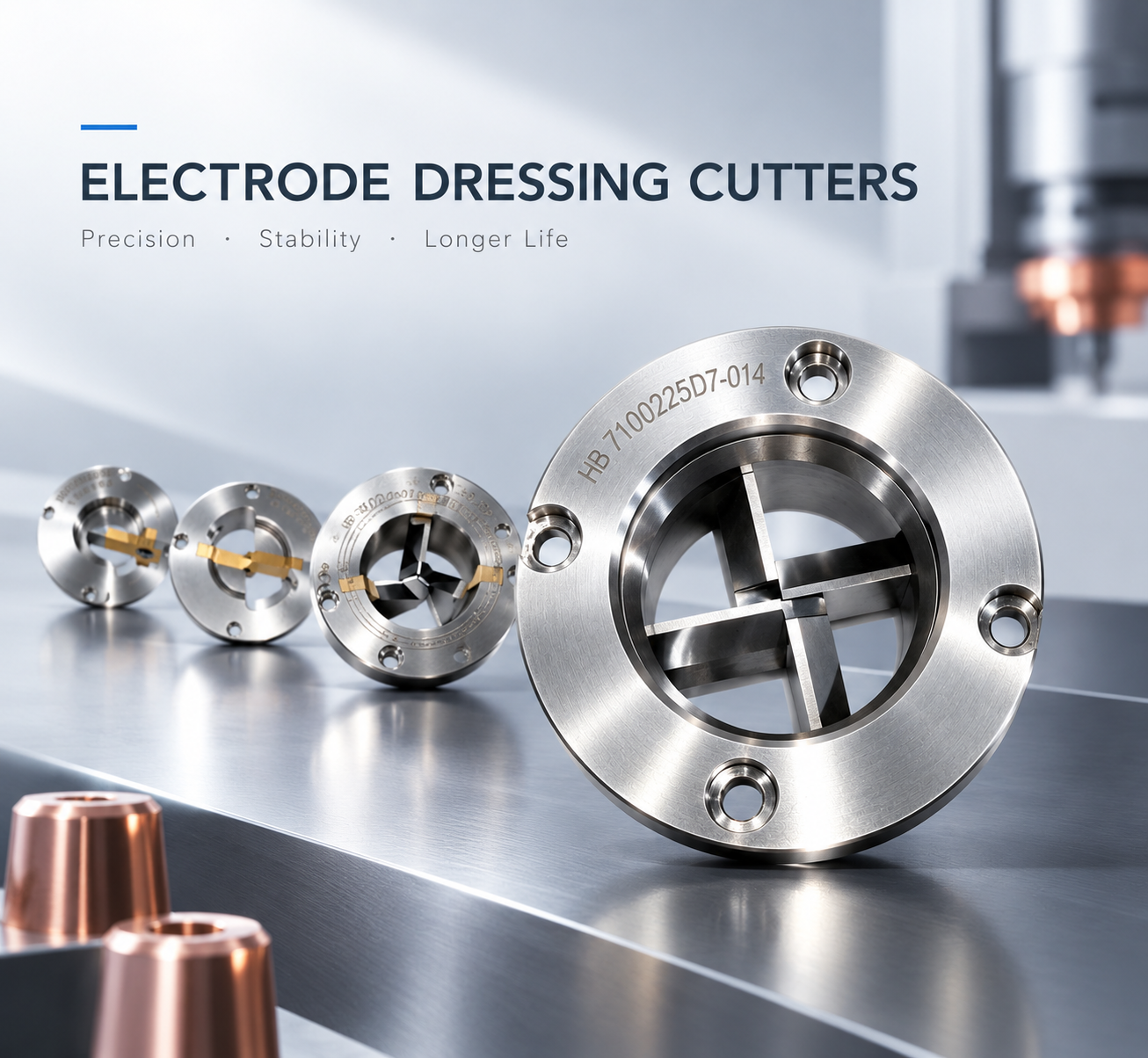
In Body-in-White (BIW) production, electrode cap dressing may seem like a relatively small operation. In practice, however, it has a direct connection with electrode cap life, weld consistency, production cycle time, and maintenance cost. Many problems on the shop floor do not start with a failure of the electrode dresser itself. They often develop gradually from the cutter: an unsuitable cutter selection, a mismatch between the cutter and dressing parameters, or continued use after the cutting edge has worn. The result may eventually appear as an abnormal electrode face, inconsistent dressing, or changes in weld quality. From our experience with electrode cap dressing applications, we believe that an electrode dressing cutter should not be selected based only on purchase price or theoretical tool life. The cutter, electrode cap, dressing machine, and process parameters need to work as one matched system. This is one of the key factors we consider when developing electrode cap dressing solutions. 1. Why Does an Electrode Dressing Cutter Affect Weld Quality? After continuous welding, the electrode cap gradually develops wear, deformation, and material buildup on its working face. If the electrode cap is not dressed at the appropriate interval, its geometry changes. This can affect the contact area and current density during resistance spot welding. The purpose of electrode cap dressing is not simply to “remove a layer” from the cap. The objective is to restore a stable: Electrode face diameter Face geometry Concentricity Surface condition Contact geometry The dressing cutter is the component that directly creates this geometry. When the cutter condition changes, the dressing result changes with it. For example, as a cutting edge becomes dull, the actual cutting condition may change even when spindle speed, dressing pressure, and dressing time remain unchanged. On the production line, this may appear as: Changes in electrode…