

The weld cycle is complete. The stud looks properly welded, and the welding system shows no obvious alarm.
Then, during assembly or a pull test, the weld stud breaks away from the workpiece.
For engineers responsible for welding quality, this is a familiar but frustrating situation. The first reaction is often to increase the welding current or extend the weld time. Sometimes that changes the result.
But if the actual cause lies in stud positioning, grounding, surface condition, feeding stability, or process repeatability, changing the welding parameters alone may only move the problem from one place to another.
A more reliable approach is to look at the complete welding process and determine where the weld started to lose stability.
02|Start With the Failed Weld
Before changing any welding parameters, start with the failed weld itself.
The fracture surface can provide useful evidence about how the weld was formed. Little visible fusion may point toward insufficient heat input or unstable arc conditions. Uneven fusion around the stud may indicate problems with gun alignment, stud positioning, grounding, or surface condition.
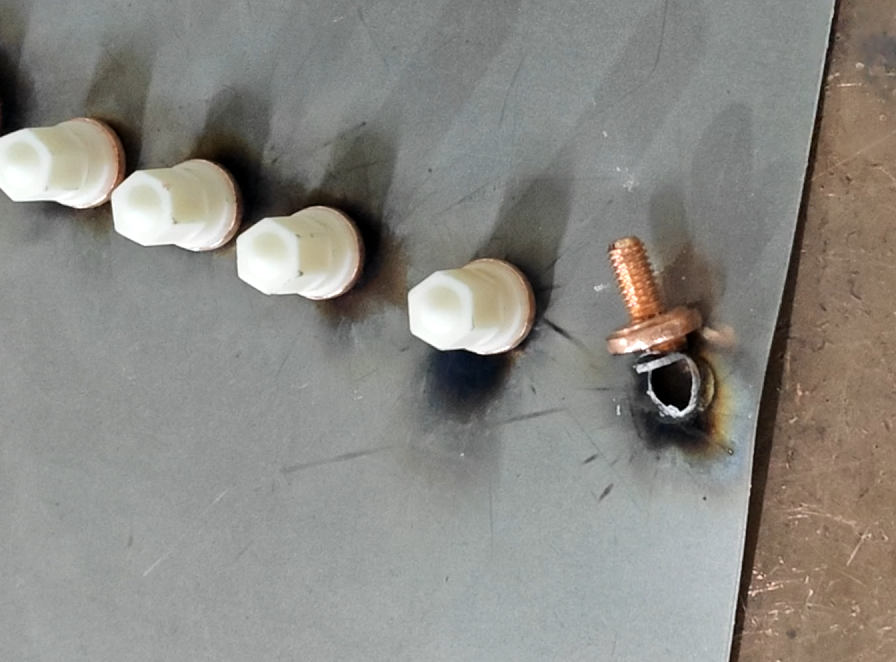
Cross-section analysis reveals the difference between proper fusion, partial fusion, and lack of fusion in 螺柱焊接.
It is also important to distinguish between a stud that never achieved sufficient fusion and one that formed a weld but later failed under mechanical loading. These two situations may look similar from the outside, but they require different troubleshooting approaches.
Cross-section analysis can reveal the difference between proper fusion, partial fusion, and lack of fusion in stud welding.
The first question should therefore be:
What does the failed weld tell us about how the weld was formed?
| Observed Condition | Possible Direction of Investigation |
|---|---|
| Little or no visible fusion | Welding current, weld time, lift height, arc stability |
| Uneven fusion around the stud | Gun alignment, stud positioning, grounding |
| Excessive spatter | Heat input, arc conditions, parameter combination |
| Weld looks acceptable but stud pulls off | Effective fusion area, surface condition, material compatibility |
| Defect occurs intermittently | Welding gun, consumables, grounding, feeding, process repeatability |
The failed weld is not just the result of the problem. It is also evidence that can help locate the problem.
03|Welding Current Matters, But It Is Only Part of the Process
Welding current directly affects the energy delivered to the weld zone, but current should not be considered independently.
Weld time, lift height, and arc voltage all influence the formation and stability of the weld pool. At the same time, stud diameter, stud material, base material, sheet thickness, and surface condition can change the way the welding process behaves.
Too little energy may result in insufficient fusion. Excessive energy can increase spatter, destabilize the weld pool, or create burn-through on thin sheet metal.
For automated stud welding, the objective is therefore not simply to increase welding current.
The real target is controlled and repeatable weld energy.
04|The Welding System Needs to Control More Than Current
As production becomes more automated, the welding system becomes an important part of process stability.
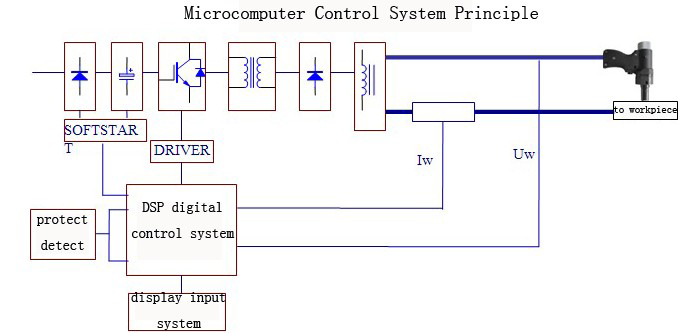
Hongbai’s HEAS stud welding system is designed for short-cycle drawn-arc stud welding and supports multiple welding strategies, including single- and multi-pulse control. Its high-speed control architecture is designed to provide precise management of the welding cycle and stable energy delivery.
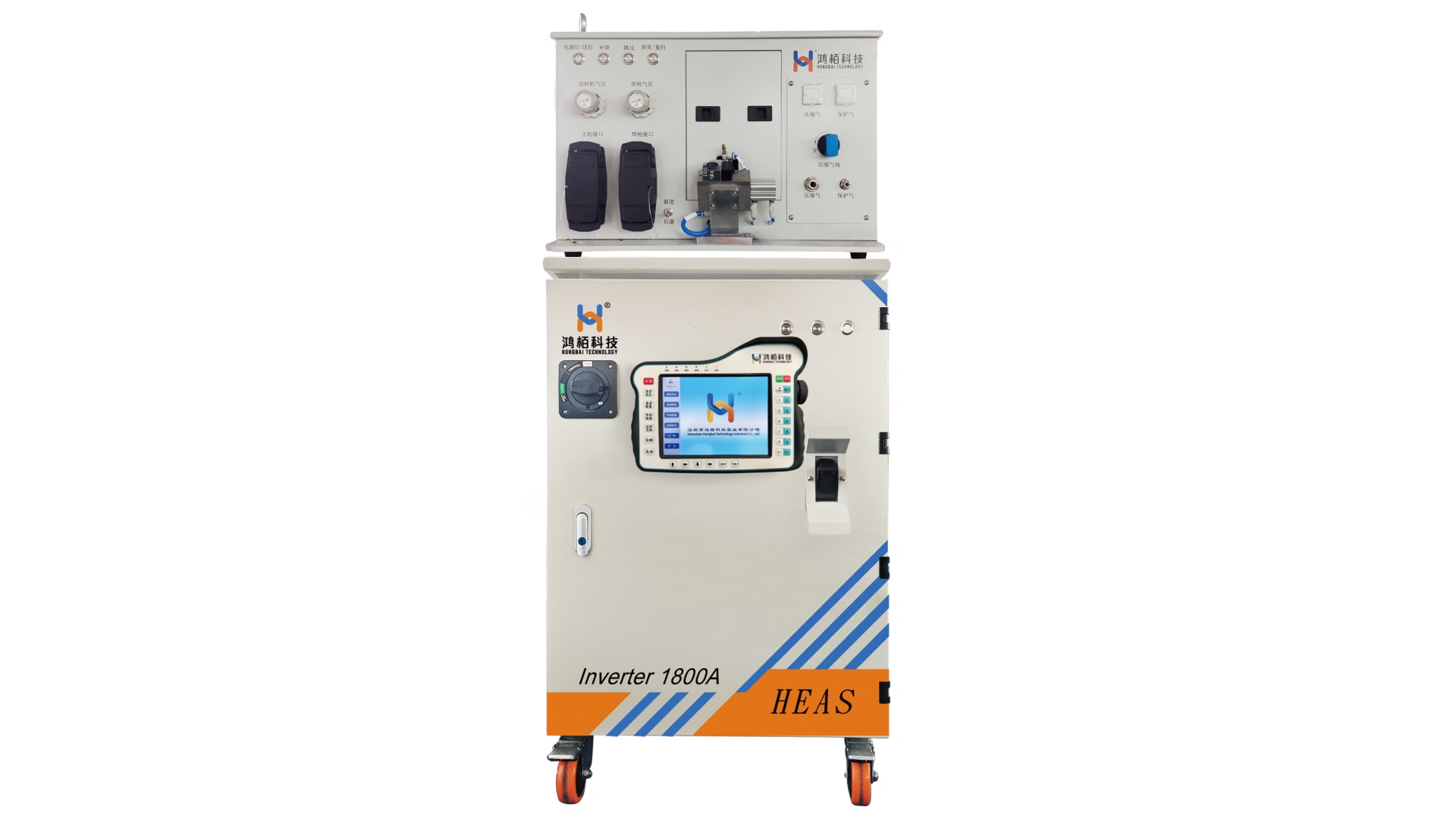
HEAS coordinates the welding power source, stud feeder, and welding gun in an automated stud welding application.
In an automated application, the HEAS welding system works together with the stud feeder and welding gun to maintain a controlled and repeatable welding cycle.
For engineers integrating stud welding into robotic production, this distinction matters.
The welding system is not simply responsible for “making an arc.” It needs to provide a controlled welding process that can be repeated consistently across production cycles.
This becomes especially important when the same production system needs to handle different stud specifications or operate continuously in a high-cycle automotive environment.
05|The Set Parameter Is Not Always the Actual Welding Condition
The programmed welding current, weld time, and lift height define what the system is expected to do.
They do not always tell the full story of what happened during the actual weld.
Mechanical movement, electrical contact, grounding conditions, and stud positioning can all affect the final welding result. Even when the parameter screen shows the same settings, the actual process may vary from one cycle to another.
This is where real-time process feedback becomes valuable.
Hongbai’s PIDS stud welding system integrates servo position feedback into the welding process, allowing engineers to monitor the actual stud movement and welding process in real time.
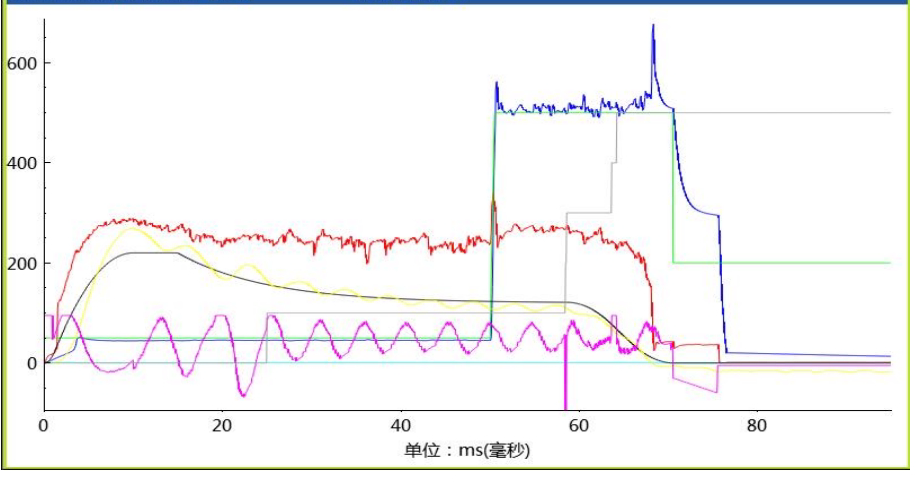
PIDS monitors actual stud welding process data and position feedback in real time.
Instead of looking only at the final weld, engineers can use process data to understand whether the stud followed the expected movement and welding sequence.
Set Parameters → Actual Process → Feedback → Weld Result
The purpose is not simply to collect more data. It is to make changes in the welding process more visible, giving engineers stronger evidence when troubleshooting inconsistent welds.
| Parameter | Why It Matters | What Engineers Should Look For |
|---|---|---|
| Welding Current | Controls heat input and weld pool formation | Current stability |
| Weld Time | Determines how long energy is applied | Cycle-to-cycle consistency |
| Lift Height | Influences arc length and stability | Repeatable stud movement |
| Arc Voltage | Reflects arc condition | Unexpected fluctuations |
| Weld Energy | Indicates overall energy delivered | Significant variation |
The parameter screen shows what the system was instructed to do.
Actual process data helps show what happened during the weld.
06|If the Welding Data Looks Normal, Look at the Gun
When the welding parameters and process data appear normal, the next place to investigate is the welding gun.
The stud welding gun controls both the electrical connection and the mechanical position of the stud. A worn, contaminated, or deformed contact tip or collet can affect current transfer and stud positioning.
The Contact Tip, Collet, and Weld Stud form the critical front-end components of a stud welding gun.
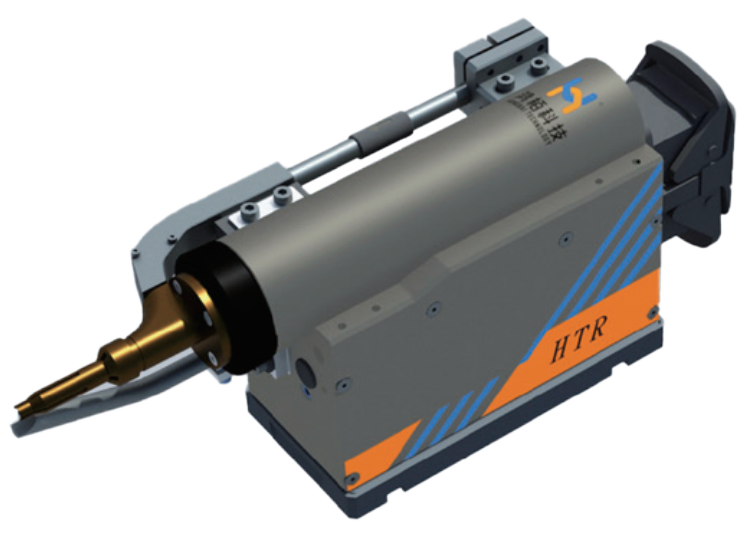
The contact tip, collet, and weld stud form the critical front-end components of a stud welding gun.
Gun alignment is equally important.
If the stud is not positioned correctly relative to the workpiece, the resulting weld may become uneven even when the welding parameters themselves have not changed.
This is why some problems that initially appear to be electrical problems are actually mechanical problems.
In automated production, the welding gun needs to maintain the same relationship between the stud, workpiece, and welding circuit on every cycle.
07|Grounding Is Part of the Welding Process
A stud welding system requires a complete electrical circuit.
Welding current must travel through the welding gun, stud, and workpiece before returning through the grounding connection.
A loose ground clamp, damaged cable, contaminated contact point, or unstable grounding connection can change the actual welding condition.
This can be particularly difficult to identify when the defect is intermittent.
If the welding system provides current, voltage, or energy monitoring, comparing actual process data can help determine whether grounding conditions are contributing to the variation.
The important point is simple:
The complete electrical and mechanical conditions need to remain comparable from one weld cycle to the next.
08|Before Changing the Machine, Check What the Machine Is Welding
The welding machine does not operate in isolation.
The condition of the material being welded is part of the welding process itself.
Oil, grease, rust, cutting fluid, paint, or excessive coating can interfere with arc initiation and weld formation.
Galvanized steel introduces a zinc coating that must be considered during process development. Aluminum presents another challenge because of its surface oxide layer and different thermal and electrical characteristics.
For this reason, a welding process that works well on one material combination cannot automatically be transferred to another without validation.
Surface condition, base material, sheet thickness, and coating should all be considered when investigating an unexpected change in weld quality.
09|In Automated Welding, Stud Feeding Becomes Part of Weld Quality
Once stud welding moves into automated production, the welding process no longer starts when the arc is initiated.
It starts when the correct stud is loaded, fed through the tube, and positioned correctly in the welding gun.
A stud feeder may appear to be a supporting device, but in a high-cycle production line, its stability can directly affect the welding cycle.
Incorrect stud loading, feeding interruptions, blockages, or inconsistent stud positioning can lead to cycle interruptions or incorrect welding conditions.
Hongbai’s automatic stud feeding systems are designed to work together with the stud welding gun and welding system, creating a continuous process:
Stud Loading → Stud Feeding → Gun Positioning → Arc Initiation → Welding → Process Feedback
For engineers designing an automated workstation, this is an important distinction:
The feeder is not separate from the welding process. It is part of the process.
10|Material Compatibility Still Needs to Be Confirmed
Before changing welding parameters, confirm that the stud and base material are suitable for the selected welding process.
Stud material, base material, sheet thickness, surface coating, and welding method can all influence the final weld.
For example, a process developed for steel-on-steel welding should not simply be transferred to an aluminum application without considering the different material characteristics and welding requirements.
When a new material combination is introduced, process validation should be carried out before the parameters are released for production.
11|One Failed Stud Is a Weld Defect. Repeated Failures Are a Process Problem.
A single pull-off may be an isolated defect.
When the same failure appears repeatedly, however, the question becomes much broader.
In manual welding, consistency can depend heavily on the operator, welding gun condition, and working method.
In semi-automatic production, the feeder, gun, and operator all influence the result.
In fully automated production, stud feeding, robot positioning, welding parameters, gun movement, and process feedback all become interconnected.
The objective of automation is therefore not simply to produce one good weld.
It is to make the first weld and the thousandth weld as consistent as the process allows.
That requires the welding system to control the variables that can change from cycle to cycle.
12|A Better Way to Troubleshoot Stud Pull-Off
When a weld stud pulls off, changing the welding current should not automatically be the first response.
A more systematic troubleshooting path is:
Failed Weld → Actual Welding Conditions → Welding Gun & Consumables → Grounding → Workpiece → Stud Feeding → Material Compatibility
A systematic approach to stud pull-off troubleshooting: check actual welding conditions, gun and consumables, grounding, workpiece, stud feeding, and material compatibility before changing welding parameters.
At each stage, look for evidence rather than assumptions.
If the welding data is abnormal, investigate the welding process.
If the data is normal but the weld is inconsistent, inspect the gun, consumables, grounding, and workpiece.
If the weld is stable manually but inconsistent in automated production, investigate feeding, positioning, and system integration.
Most importantly, change one variable at a time whenever possible.
Otherwise, it becomes difficult to determine which change actually affected the weld result.
13|From Individual Weld Control to System-Level Stability
When stud welding is used in automated automotive production, weld quality is determined by more than the welding system alone.
The welding gun controls stud positioning.
The feeder controls stud delivery.
The welding system controls the welding cycle.
The robot controls the welding position.
Process feedback provides visibility into what actually happens during the welding cycle.
These elements need to work as one process rather than as independent pieces of equipment.
Hongbai provides automated stud welding solutions based on different welding system platforms, including HEAS and PIDS, together with automatic stud feeders and stud welding guns.
HEAS and PIDS are different stud welding system platforms designed for different process requirements and application scenarios. In an automated production line, either system can be integrated with the corresponding feeder, gun, robot, and production controls according to the project requirements.
The objective is straightforward:
not simply to produce one good weld, but to make the welding process more stable, repeatable, and traceable across production cycles.