
An electrode cap is a critical consumable component in resistance spot welding. It directly participates in the welding process and plays an important role in maintaining stable electrical and mechanical conditions at the weld interface. In automotive manufacturing, Body-in-White (BIW) production and other high-volume automated spot welding applications, the condition of the electrode cap can directly affect weld quality, process stability and production efficiency.
As the number of welds increases, the working face of the electrode cap gradually becomes worn, deformed or contaminated. Copper pickup, surface marks and other irregularities may also develop during continuous welding. Electrode cap dressing is therefore used to remove the damaged surface layer and restore the required geometry and working condition of the electrode cap.
However, electrode cap dressing is not simply a matter of removing as much material as possible.Insufficient dressing may leave damaged areas on the working face, while excessive dressing unnecessarily removes electrode material and reduces the number of effective dressing cycles available from a single electrode cap. Therefore, controlling the dressing amount, selecting the right dressing cutter, performing routine maintenance and using intelligent inspection to identify abnormalities are all important for extending electrode cap life.
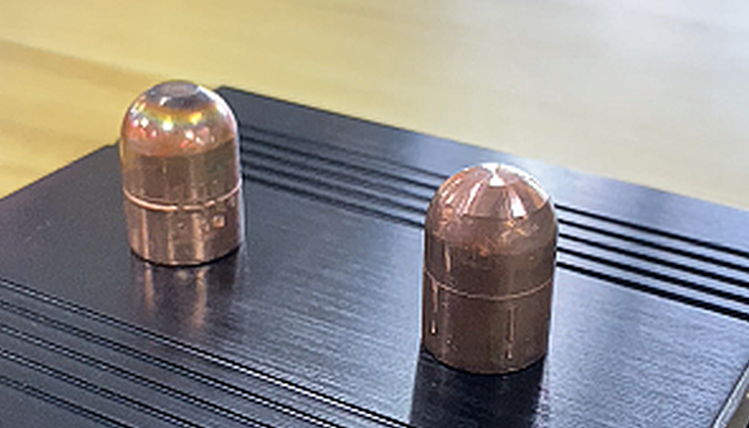
In practical production applications, electrode cap dressing performance can be systematically improved through four key areas.
1. Control the Dressing Amount to Avoid Excessive Material Removal
The primary objective of electrode cap dressing is to remove damaged material and restore the required working face—not to remove more material than necessary.
If the dressing amount is insufficient, defects generated during welding may remain on the electrode face, including black marks, raised areas, localized wear and uneven surfaces. These conditions can alter current density and electrode force distribution, potentially affecting weld consistency.
On the other hand, excessive dressing removes a larger amount of otherwise usable electrode material. This accelerates electrode cap length reduction, decreases the number of available dressing cycles and ultimately increases electrode replacement frequency and operating costs.
For this reason, the appropriate dressing parameters should be determined according to factors such as electrode cap geometry, workpiece material, welding current, weld count and the actual wear condition of the electrode.
Simultaneous Dressing of Upper and Lower Electrode Caps
For a spot welding gun, the concentricity and face-to-face matching of the upper and lower electrode caps are important for maintaining consistent welding conditions.
If the two electrode caps are dressed separately and significant dimensional or positional deviations occur, the resulting contact area may become uneven. This can lead to non-uniform current distribution and localized pressure concentration.
Hongbai’s electrode cap dressing machine uses high-speed carbide-coated cutter blades and supports simultaneous dressing of the upper and lower electrode caps, helping maintain consistent geometry and concentricity between the two electrode faces.
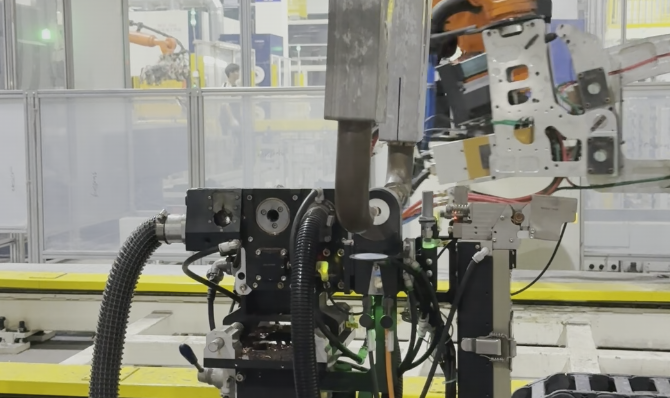
With properly controlled electrode cap dressing machine parameters, the electrode face can be restored while minimizing unnecessary material removal and repeated dressing operations, helping maximize electrode cap utilization.
2. Select the Right Dressing Cutter for Consistent Quality and Longer Service Life
Electrode cap dressing quality depends not only on the dressing machine and process parameters, but also on the cutter design, cutting-edge condition and compatibility between the cutter and electrode cap.
A severely worn cutter, an incorrectly matched cutter or improper installation can result in excessive or undersized electrode faces, eccentricity, incomplete dressing or uneven dressing. These conditions may subsequently affect current distribution and electrode force during welding.
Therefore, the dressing cutter should be selected according to the electrode cap geometry, dimensions and specific application requirements.
Multi-Edge Design for Efficient Dressing and Extended Cutter Life
To meet different production requirements and electrode cap dressing conditions, Hongbai has developed an optimized range of dressing cutters based on a multi-element design concept, including single-edge, double-edge, triple-edge and four-edge configurations.
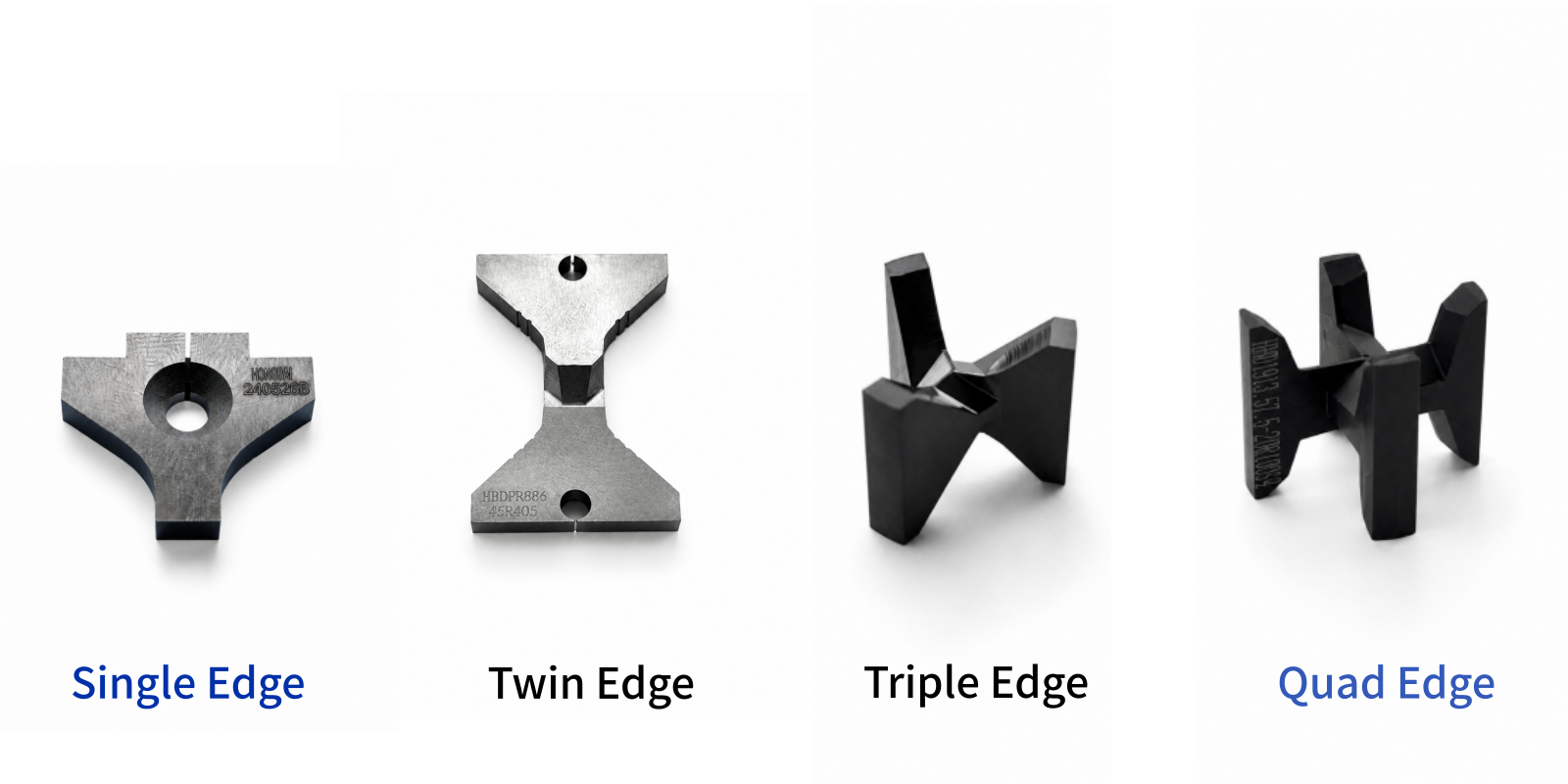
The multi-edge design allows the cutter to be indexed and reused through multiple cutting edges. Compared with a single fixed cutting edge, multiple effective edges can be fully utilized throughout the cutter’s service life, helping extend overall cutter life.
For high-volume automated spot welding lines, this means:
- Reduced cutter replacement frequency;
- Lower cutter consumption;
- Shorter maintenance time;
- Reduced production downtime caused by cutter replacement;
- Improved continuity of electrode cap dressing operations.
Therefore, selecting the appropriate multi-edge dressing cutter is important not only for individual dressing results, but also for long-term maintenance efficiency, operating costs and equipment utilization.
Quick Installation and Removal for Easier Maintenance
Cutting performance is only one consideration in an industrial production environment. Ease of installation and maintenance is also an important factor affecting equipment availability.
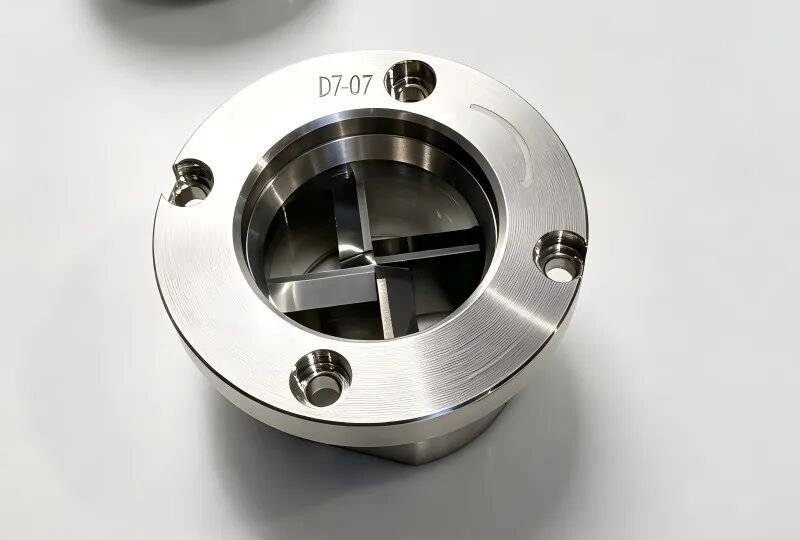
Hongbai’s dressing cutters and cutter holders are designed for convenient installation and removal, allowing operators to efficiently replace cutters, perform routine maintenance or adjust dressing components.
For continuously operating automated spot welding lines, reducing cutter replacement time can further minimize equipment downtime while reducing the maintenance workload for operators.This is particularly important for high-throughput applications such as automotive body assembly and Body-in-White (BIW) spot welding.
Simultaneous Dressing of Upper and Lower Electrode Caps for Better Concentricity
During spot welding, the geometric relationship between the upper and lower electrode faces directly affects electrode force and current distribution.
If the two electrode caps are dressed separately and significant dimensional or positional deviations occur, the contact area may become uneven, potentially causing localized current concentration and inconsistent weld results.Hongbai’s dressing solution supports simultaneous dressing of the upper and lower electrode caps, helping maintain consistent face dimensions and geometry while improving concentricity between the two electrode caps.By reducing geometric deviation between the upper and lower electrodes, the system helps provide more consistent electrode-to-workpiece contact conditions and a more stable foundation for the spot welding process.
Customized Cutters for Non-Standard Electrode Caps
Not all electrode caps used in industrial production follow standard dimensions.Different welding guns, equipment configurations and specialized welding processes may require electrode caps with non-standard dimensions or geometries. In these applications, a standard cutter may not provide the required dressing result.
For non-standard electrode cap applications, Hongbai provides customized electrode cap dressing cutters based on electrode dimensions, working-face geometry and specific dressing requirements.By adapting the cutter geometry and dressing solution to the electrode cap, customized cutters can better meet the requirements of different electrode designs, dimensions and application conditions.
3. Routine Maintenance Also Affects Electrode Cap Life
Electrode cap life is not determined by dressing parameters alone.
In continuous automated spot welding production, the condition of the welding gun, contact components, locking components and feeding system can also affect overall welding stability and electrode cap performance.
For example, accumulated weld spatter may cause components to stick together, while loose connections can increase the risk of abnormal arcing or electrical discharge. These conditions may accelerate electrode cap wear or cause premature damage to related welding components.Establishing a structured maintenance schedule is therefore an important part of spot welding electrode cap life management.
Daily Inspection
- Check the contact tip for weld spatter;
- Check whether the contact tip is properly secured;
- Remove accumulated spatter;
- Check clamping conditions;
- Clean the anti-spatter components.
Weekly Inspection
- Check the tightening condition of connection plates;
- Inspect the stud receiver for wear;
- Check related connections for abnormal looseness.
Monthly Inspection
- Check the sealing condition of the feeding tube;
- Check the tightening condition of locking screws;
- Inspect feeding and connection components for abnormal wear.
Annual Inspection
- Perform a comprehensive inspection of the welding gun;
- Check for mechanical wear caused by long-term operation;
- Service or replace components according to their actual condition.
Although these maintenance tasks are relatively routine, they can reduce the risk of spatter accumulation, loose components and abnormal arcing, helping prevent premature electrode cap damage.
4. AI Vision Inspection: Making Electrode Cap Dressing Quality Measurable
On high-throughput automated spot welding lines, relying solely on manual inspection of electrode cap faces makes it difficult to achieve consistent and quantifiable quality control.
Traditional electrode cap inspection often relies on operator experience and visual judgment to determine whether an electrode cap requires additional dressing or contains defects. However, manual inspection can be affected by operator experience, lighting conditions and viewing angles.Integrating AI vision inspection after electrode cap dressing provides a more standardized approach to verifying dressing results and identifying abnormalities on the electrode face.
AI Detection of 11 Electrode Face Defect Types
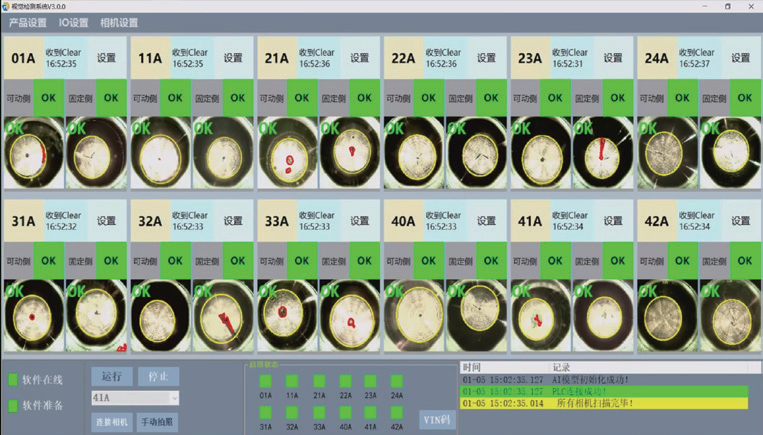
Hongbai’s AI vision dressing inspection system uses a deep-learning AI model to automatically inspect dressed electrode caps and identify the following 11 types of electrode face defects:
- Black marks
- Raised areas
- Copper pickup
- Pits
- Radial marks
- Out-of-round electrode face
- Electrode face eccentricity
- Oversized electrode face
- Undersized electrode face
- Incomplete dressing
- Uneven dressing
By automatically analyzing the electrode face condition, the system reduces dependence on subjective visual inspection and converts electrode dressing quality into measurable inspection data.
Dual NG Criteria: Total NG Area + NG Area Ratio
In actual production, not every minor localized anomaly necessarily means that an electrode cap should be classified as NG.The system therefore uses a dual-criteria NG evaluation based on total NG area and NG area ratio.An electrode cap is classified as NG only when both parameters exceed their configured thresholds.This approach evaluates both the absolute defect area and its relative proportion, helping reduce false rejects caused by isolated or minor abnormalities.
Real-Time Data Statistics
The system provides real-time statistics of OK/NG quantities and percentages, while historical inspection data can be searched by date or product ID.
When the NG rate changes abnormally, production engineers can analyze historical data together with dressing parameters, cutter condition and equipment operating status.
AI Model Development and Scalability
The system is equipped with the RAIDI Vision Inspection Model Development Platform, supporting the complete AI model development workflow from data annotation and model training to inference.
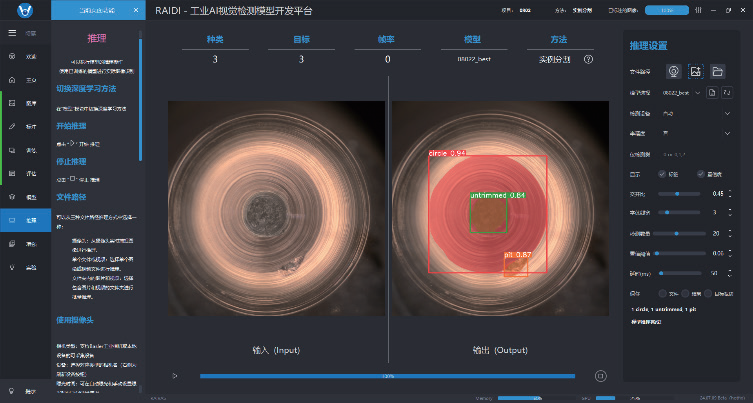
When new defect types are identified or additional inspection requirements arise for specific electrode cap designs, further model development and optimization can be performed based on actual production samples.
This enables the vision inspection system to continuously adapt to different electrode cap designs, production conditions and inspection requirements.
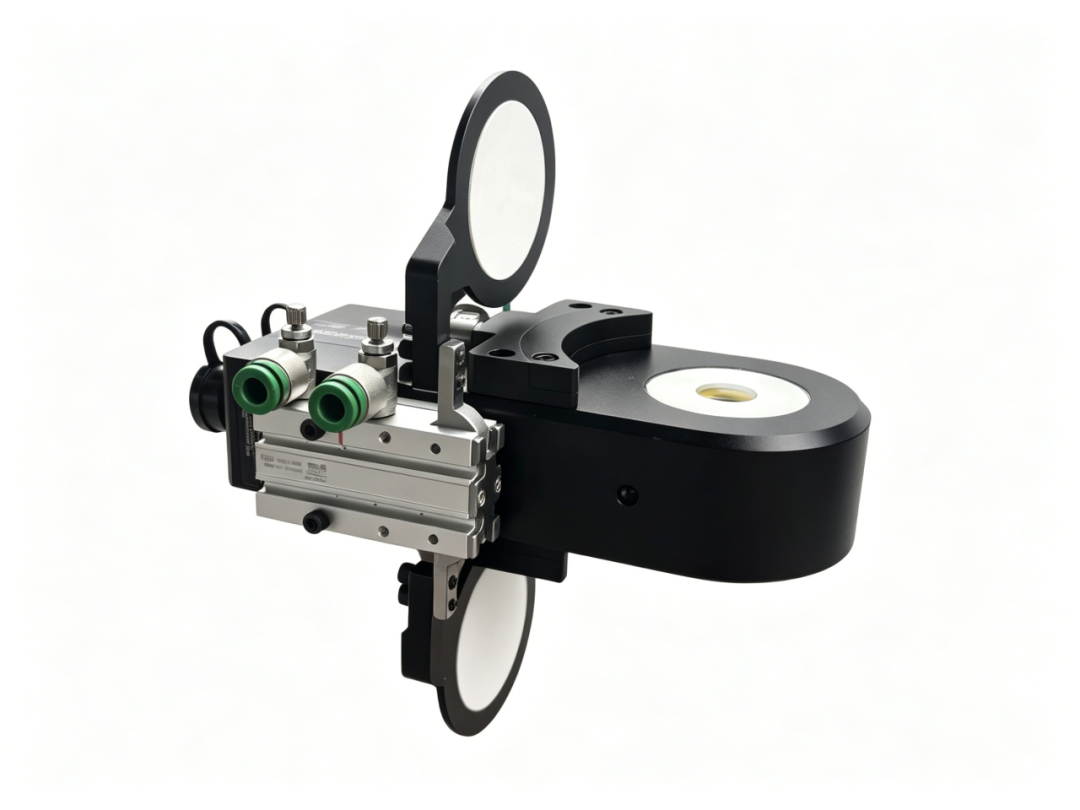
Support for Up to 12 Camera Sensors
The industrial computer can support up to 12 camera sensors, providing greater flexibility for multi-position and multi-angle automated vision inspection applications.Depending on the production line configuration, multiple vision sensors can be deployed at different inspection positions to support more complex automated inspection requirements.
AI Vision Dressing Inspection System – Technical Specifications
| Parameter | Technical Specification |
|---|---|
| Inspection Capability | Built-in deep-learning AI model for detecting 11 types of electrode face defects |
| Decision Logic | Dual criteria based on total NG area + NG area ratio; both parameters must exceed their thresholds for an NG decision |
| Data Statistics | Real-time OK/NG quantity and percentage; historical data searchable by date and product ID |
| Traceability | System logs + product logs with image comparison |
| AI Model Development | RAIDI vision inspection model development platform supporting annotation, training and inference |
| Industrial Computer Support | Up to 12 camera sensors |
| Robot Repeatability | ±0.02 mm |
| Camera Accuracy | Variable |
| Overall Equipment Accuracy | ±0.05 mm |
| Inspection Cycle Time | 1.5 s/PCS |
| Tray Size | Optional |
| Equipment Dimensions | 800 × 750 × 1915.3 mm (customizable) |
| Operating Air Pressure | 0.5–0.7 MPa |
| Power Supply | 220 V AC |
5. From Single Inspection to Full Process Traceability
Effective electrode cap quality management should not focus only on whether a single dressing operation passes inspection. It should also track how electrode condition and dressing quality change over time.。
The AI vision inspection system can continuously record OK/NG results, defect types, product IDs and inspection images, gradually building a quality database for electrode cap dressing.
When the NG rate of a particular batch increases or a specific defect repeatedly occurs, engineers can analyze the relationship between cutter wear, dressing parameters, equipment condition and maintenance intervals.
When a weld-quality issue occurs on the production line, historical images and inspection data can also be compared to investigate whether the potential cause is related to:
- Electrode cap wear
- Incorrect dressing amount
- Cutter wear
- Incorrect cutter selection
- Incomplete dressing
- Uneven dressing
- Electrode face eccentricity
- Abnormal electrode face dimensions
This transforms electrode cap dressing from an isolated maintenance operation into a closed-loop quality management process:
Dressing → Inspection → Data Recording → Root-Cause Analysis → Parameter Optimization
6. Extending Electrode Cap Life Is About Proper Dressing—not Simply Less Dressing
In practical spot welding production, extending electrode cap life does not simply mean reducing the number of dressing operations.If an excessively worn electrode cap continues to be used simply to reduce dressing frequency, weld quality and consistency may deteriorate, potentially increasing rework and quality risks.A more effective approach is to maintain the required welding quality while optimizing four key areas:
Proper dressing amount + Correct cutter selection + Routine maintenance + AI-based condition inspection
These four elements work together.
Proper dressing parameters minimize unnecessary electrode material removal. High-efficiency, long-life multi-edge cutters improve dressing efficiency while reducing replacement frequency. Routine maintenance helps prevent premature damage caused by spatter, loose components or abnormal arcing. AI vision inspection provides objective feedback on electrode face condition and supports continuous optimization of dressing parameters.
For high-volume automotive spot welding, Body-in-White (BIW) production and other automated welding applications, this systematic approach to electrode cap dressing management can help extend electrode cap life, improve welding process stability and reduce downtime and quality risks caused by abnormal electrode conditions.
Key Elements of Electrode Cap Dressing Management
| Management Area | Key Focus | Impact on Electrode Cap Life |
|---|---|---|
| Dressing Parameters | Control the appropriate dressing amount | Minimize unnecessary electrode material removal |
| Cutter Selection | Match the cutter to electrode geometry and application | Improve dressing quality and cutter service life |
| Routine Maintenance | Remove spatter and check fastening and wear | Reduce the risk of premature damage |
| AI Vision Inspection | Automatically identify electrode face defects | Detect dressing abnormalities at an early stage |
| Data Traceability | Record OK/NG results and historical inspection data | Support root-cause analysis and continuous process optimization |
For automated spot welding lines operating at high production volumes, the electrode cap is more than a consumable component. It is an important part of the overall welding quality management system.
By combining electrode cap dressing, electrode tip dressing, electrode cap dressing machines, high-efficiency dressing cutters and AI visual inspection, manufacturers can move from periodic maintenance toward a more precise, data-driven approach to electrode condition management—helping maintain consistent weld quality while maximizing the service life and utilization of every electrode cap.