

Introduction: The Evolution of Joining Technology in Modern Manufacturing
For decades, resistance spot welding and traditional welding processes have been widely used in automotive manufacturing and industrial production.
However, the rapid development of electric vehicles (EVs), lightweight structures, and multi-material applications has created new challenges for joining technologies.
Modern manufacturing is no longer limited to single-material structures. Increasingly, manufacturers are working with combinations of:
- High-strength steel (AHSS)
- Aluminum alloys
- Galvanized steel
- Composite materials
- Multi-layer structures
These materials provide significant advantages in weight reduction, energy efficiency, and product performance. However, they also introduce new challenges, including:
- Material compatibility issues
- Welding deformation
- Porosity and cracking risks
- Difficult access in complex structures
- Higher requirements for automation and quality monitoring
For example, aluminum alloys have high thermal conductivity and a stable oxide layer on the surface, making traditional fusion welding more challenging. Problems such as unstable arc initiation, heat distortion, and welding defects can affect connection reliability.
In addition, joining dissimilar materials such as steel and aluminum remains difficult due to differences in melting temperature, thermal expansion, and metallurgical properties.
As a result, advanced joining technologies such as Stud Welding, SPR (Self-Piercing Riveting), and FDS (Flow Drill Screwing) have become increasingly important solutions for modern manufacturing.
These technologies are not replacements for each other. Instead, each technology provides unique advantages for different material combinations, structural designs, and application requirements.
1. Stud Welding: A Reliable Solution for Functional Fastening
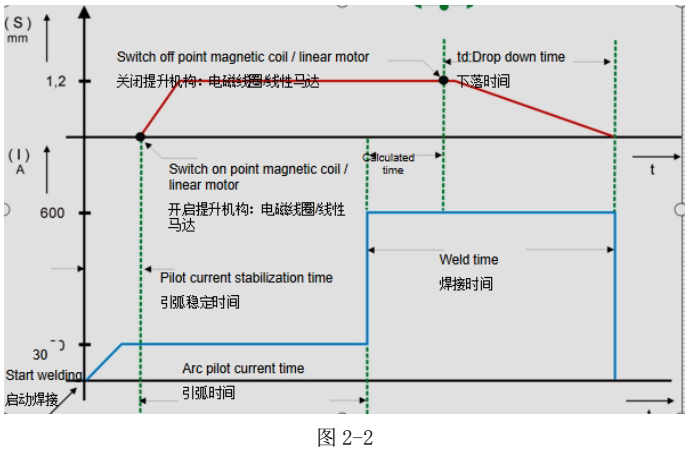
Stud welding is a process that permanently joins a metal stud to a workpiece through an arc welding process.
During welding, an arc is generated between the stud and the base material. After the contact surface melts, pressure is applied to complete the weld, creating a strong metallurgical connection.
Unlike traditional welding methods that mainly join metal components together, stud welding creates an integrated fastening point directly on the workpiece.
The welded stud itself becomes the mounting element, eliminating additional components such as drilling holes, bolts, nuts, or brackets.
Key Advantages of Stud Welding
1.1High Efficiency and Fast Installation
Stud welding enables rapid fastening and is highly suitable for high-volume manufacturing.
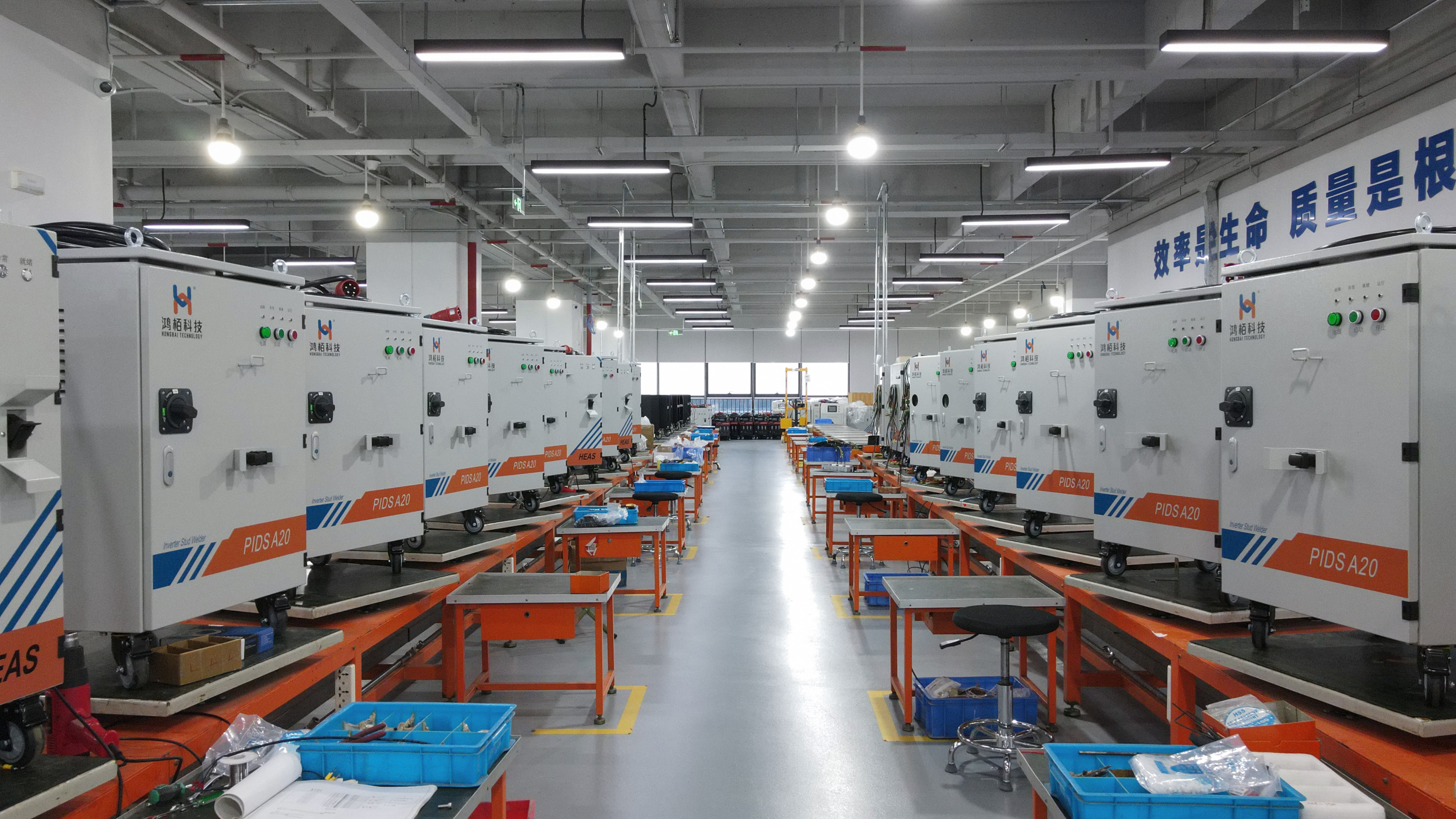
Typical applications include:
- Cable fixing
- Pipe supports
- Interior components
- Electrical components
- Functional attachments
By combining welding and fastening into one process, manufacturers can reduce assembly steps and improve production efficiency.
1.2 Flexible Automation Capability
Modern stud welding systems can be integrated with:
- Industrial robots
- PLC control systems
- Automatic stud feeders
- Servo welding guns
A complete automated process includes:
Robot positioning → Automatic feeding → Stud welding → Quality monitoring → Next welding position
This enables stable, repeatable, and efficient production.
1.3 Suitable for Thin Sheet Applications
Capacitor discharge stud welding provides extremely short welding times and shallow penetration depth.
It is suitable for applications requiring:
- Minimal backside marks
- Low thermal impact
- Thin sheet joining
1.4 Wide Material Application Range
With suitable process configurations, stud welding can be applied to:
- Carbon steel
- Stainless steel
- Galvanized steel
- Aluminum alloys
This makes stud welding suitable for automotive, appliance, electrical, and industrial manufacturing applications.
2.SPR and FDS: Alternative Solutions for Lightweight Structures
As lightweight materials become increasingly common, especially aluminum and composite materials, traditional welding processes face limitations.
This is where SPR and FDS technologies provide additional solutions.
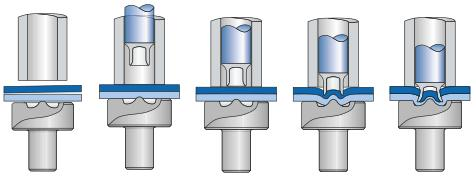
SPR (Self-Piercing Riveting)
SPR uses a semi-tubular rivet to pierce the material and form a mechanical interlock.
Advantages:
- Suitable for steel-aluminum combinations
- No welding heat input
- Good fatigue performance
- Real-time force-displacement monitoring
SPR is commonly used in lightweight structural applications where multi-material joining is required.
FDS (Flow Drill Screwing)
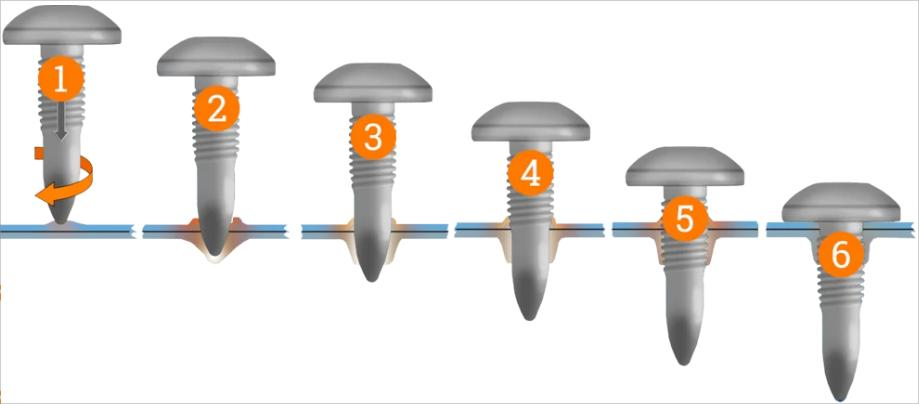
FDS uses a high-speed rotating screw to generate friction heat, penetrate the material, and form an internal thread.
Advantages:
- One-side accessibility
- Suitable for complex structures
- Removable connection
- Adjustable process parameters
FDS is often applied in areas such as battery structures and closed vehicle components.
3.Hongbai Technology: From Manual Stud Welding to Fully Automated Solutions
Driven by the widespread push for automation across modern manufacturing, stud welding has evolved from standalone manual operations into integrated automated joining processes.
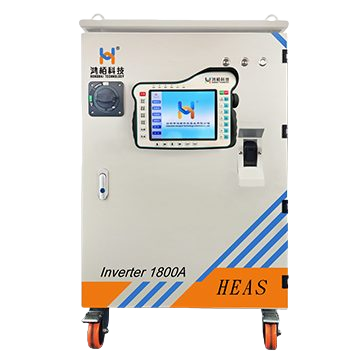
To address complex lightweight and multi-material assembly challenges, Hongbai Technology delivers a complete portfolio of advanced fastening technologies, covering not only stud welding but also SPR self-piercing riveting and FDS flow drill screwing. Our full lineup of solutions includes:
- Manual stud welding units
- Semi-automatic stud welding systems
- Automated fastener feeding equipment
- Robotic stud welding workcells
- Dedicated aluminum stud welding packages
Our integrated systems combine welding power sources, precision auto-feeders, servo welding guns, industrial robots and PLC communication architecture. This all-in-one setup enables manufacturers to run consistent, high-throughput automated production lines with reliable joint quality.
4.Choosing the Right Joining Technology
SPR, FDS, and Stud Welding each have their own advantages.
The right choice depends on:
- Material combination
- Structural design
- Accessibility
- Production requirements
- Automation level
For applications requiring fast, reliable, and automated fastening, Stud Welding continues to be a highly valuable joining technology in modern manufacturing.
5. How to Select the Right Joining Technology?
| Requirement | Recommended Technology |
|---|---|
| Functional attachments such as cables and brackets | Stud Welding |
| Lightweight multi-material structures | SPR |
| One-side accessible structures | FDS |
| Automated high-volume fastening | Stud Welding |
| Removable connection requirements | FDS |
6.Conclusion
Stud Welding, SPR, and FDS each provide unique advantages for modern manufacturing.
The best joining technology depends on material selection, structural design, production requirements, and automation goals.
Among these solutions, stud welding continues to play an important role in applications requiring fast, reliable, and automated fastening.
With advanced equipment and automation integration, stud welding provides manufacturers with a flexible solution for both current and future production challenges.
👉Looking for the right joining solution for your automotive project? Contact us to explore optimized stud welding solutions.